

Here is a question I get from patients more than you might expect: why do I keep waking up at 5am even with a sleep mask on? Nine times out of ten, the answer is not the light itself. It is the mask. Specifically, it is a flat foam eye mask sitting against the face like a coin pressed against an eyelid, letting daylight seep in along the nose bridge and riding up over the forehead every time they roll over. Flat masks were designed to block out cabin lights on airplanes, not to survive eight hours on a side sleeper's face. If you are using one at home and still catching light, this comparison is for you.
The short answer is this: a 3D contoured sleep mask like the MyHalos blocks more light, puts zero pressure on your eyes, and stays in place through the night. A flat foam mask works adequately in still, controlled conditions, which is rarely how real sleep works. What follows is a breakdown of exactly why, along with who each design actually suits.
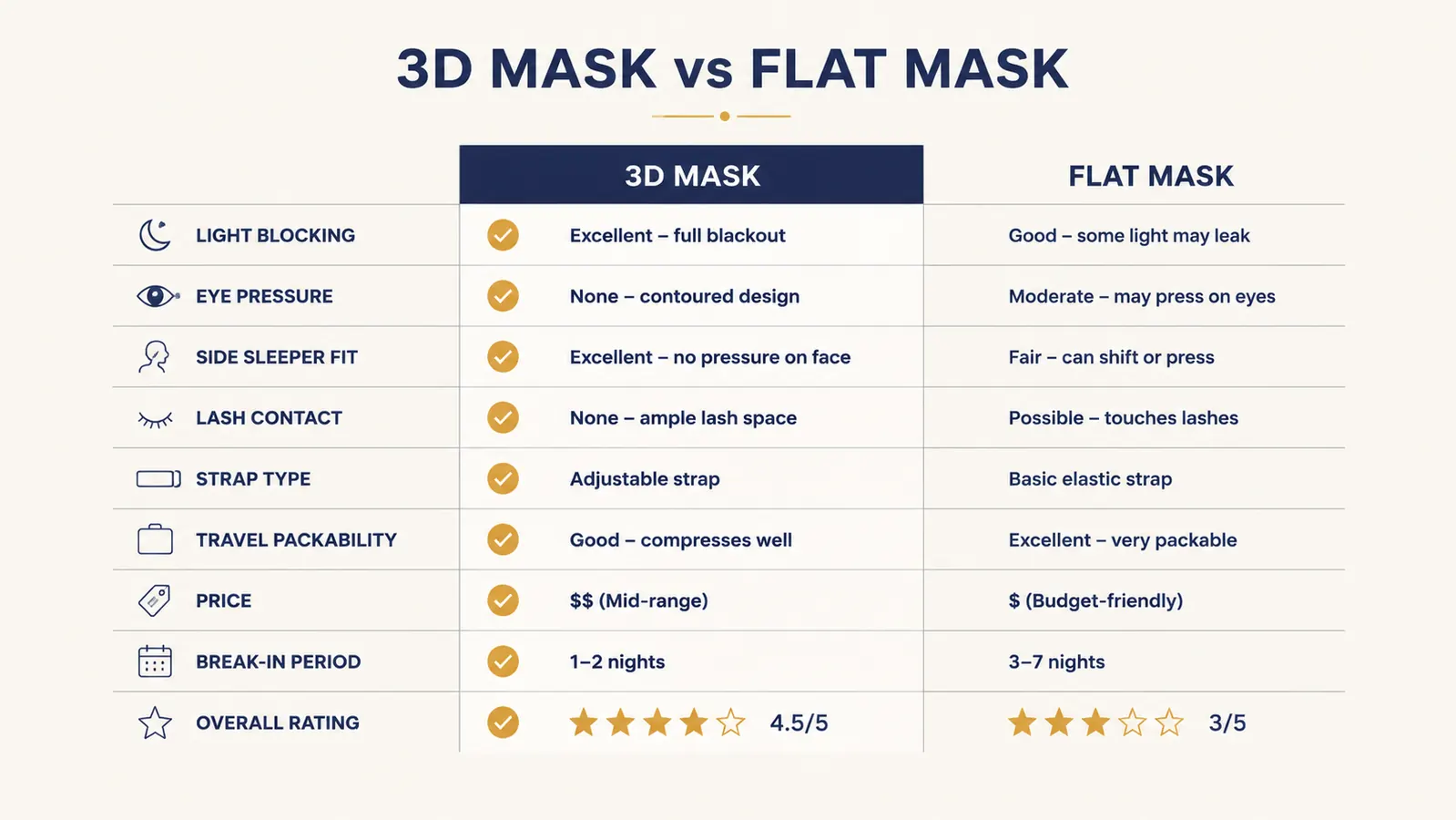
| 3D Sleep Mask | Flat Eye Mask | |
|---|---|---|
| Light Blocking | Near-total blackout, contoured seal around nose bridge | Partial, gaps form along nose bridge and cheeks |
| Eye Pressure | None, raised dome cups float above eyelids and lashes | Direct contact with eyelids, can feel uncomfortable within 30 minutes |
| Side Sleeper Fit | 3D shell absorbs pillow pressure without collapsing on eyes | Flattens against face when you press into pillow, breaks seal |
| Strap System | Adjustable elastic band with velcro or buckle, stays positioned | Single elastic loop, tends to ride up or slip down overnight |
| Eyelash Contact | No contact, cup design keeps mask surface away from lashes | Direct contact, can smear eye makeup or feel scratchy on sensitive lashes |
| Price Range | Budget-friendly on Amazon (MyHalos) | Very cheap, often included free with travel kits |
| Travel Packability | Slightly bulkier due to molded cups, fits most travel pouches | Folds flat, takes almost no space in a bag or purse |
| Break-in Period | Minimal, most people adjust within 2 to 3 nights | Virtually none, simple to put on immediately |
| Amazon Reviews | 4.7 stars across 21,549 ratings | Varies widely by brand, typically 3.9 to 4.3 stars |
Still waking up early because your mask lets light in at the edges? The MyHalos costs less than a cup of coffee and ships free with Prime.
Rated 4.7 stars by more than 21,000 people. The 3D dome design keeps light out and pressure off your eyes all night.
Amazon Check Today's Price on Amazon →Where the MyHalos 3D Mask Wins
The design difference is not subtle. A flat mask lays against your face the way a bandage does, conforming to contours it was not built for. The nose bridge gap is the biggest culprit. Even when the mask sits comfortably on your forehead and cheeks, that concave space between the bridge of your nose and the inner corner of your eye creates a small but real channel for light to enter. At 5am when the sun is already up, that gap is enough to pull you out of a light sleep cycle you cannot get back.
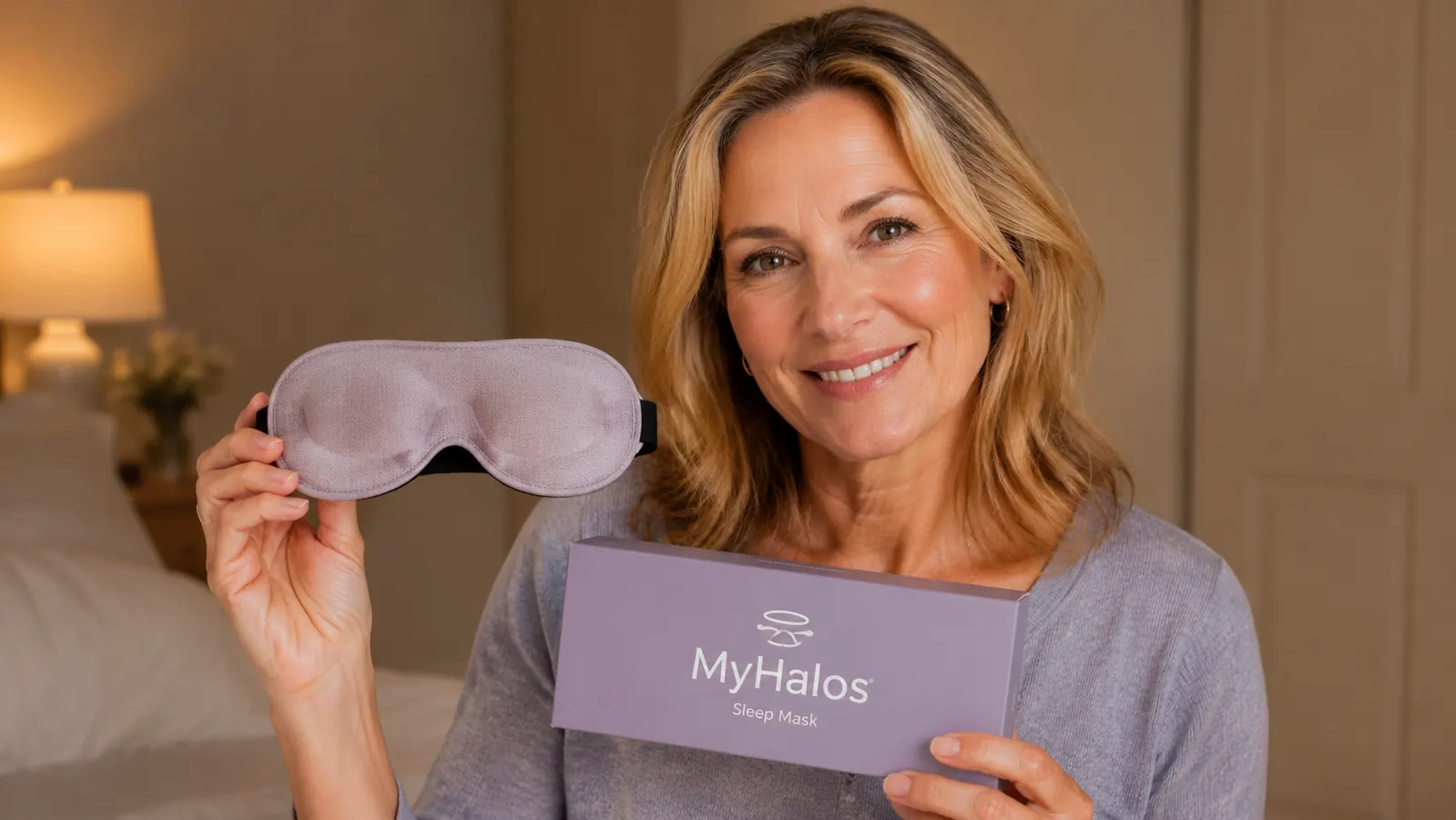
The MyHalos uses rigid shell cups that arch over your eyes without touching them. The perimeter seal is what actually contacts your skin, and it follows the orbital bone rather than resting on the eyeball or lid. The result is a mask that both blocks light more completely and removes the sensation of weight on the eye. For anyone who has had eye surgery, wears contacts and worries about pressure during sleep, or simply finds the squashed-eye feeling of a flat mask impossible to ignore, the 3D cup design removes all of that. You feel the mask around your eyes, not on them.
Side sleeping is where this design difference matters most. When you press your face into a pillow, a flat mask compresses and the seal breaks. The 3D shell on the MyHalos absorbs that pressure without collapsing, the cups maintain their shape, and the perimeter seal stays intact. I have recommended contoured masks to shift-worker patients for exactly this reason. People who sleep on their stomach or rotate through multiple positions consistently report better blackout performance from a rigid-cup design than from a flat foam one.
The other place the 3D design wins is in full-room daylight. A flat mask at its best might get you to 80 or 85 percent darkness. In a room with bright morning sun, that remaining 15 percent is often enough light to suppress melatonin and start the waking process, even if you never fully open your eyes. The sealed perimeter on the MyHalos, particularly around the nose bridge and temples where flat masks consistently fail, closes that gap. Patients who are napping mid-day or working nights and sleeping mornings report the difference most clearly. It is not dramatic the moment you put it on. You notice it two hours later when you are still asleep.
Where a Flat Foam Mask Wins
Flat masks have two real advantages and neither of them should be dismissed. First, they are cheaper. If you are buying masks in bulk for a guest room, a travel kit, or a child who tends to lose things, the cost of a 3D mask adds up where a flat foam mask is nearly disposable. Second, they fold flat. A flat mask takes up no space in a carry-on pocket or a small toiletry bag. The MyHalos molded cups are not huge, but they do not compress, so you need a small travel pouch or a dedicated space in your bag.
Flat foam masks also have essentially zero break-in period and a near-universal fit for back sleepers in controlled lighting environments. If your bedroom is already dark and you are a back sleeper who is not rolling around, a flat mask may genuinely be sufficient. The problem is that most people who are actually struggling with light during sleep are not in a dark room and are not lying perfectly still. They are dealing with early sunrise creeping past blackout curtains, a partner whose phone screen turns on at 3am, or a body that moves through every position in a night. Those conditions are where the flat mask consistently lets you down.
A flat mask sits on your face. A contoured mask seals around it. That distinction is what separates getting another hour of sleep from staring at the ceiling.
The Strap Makes More Difference Than You Think
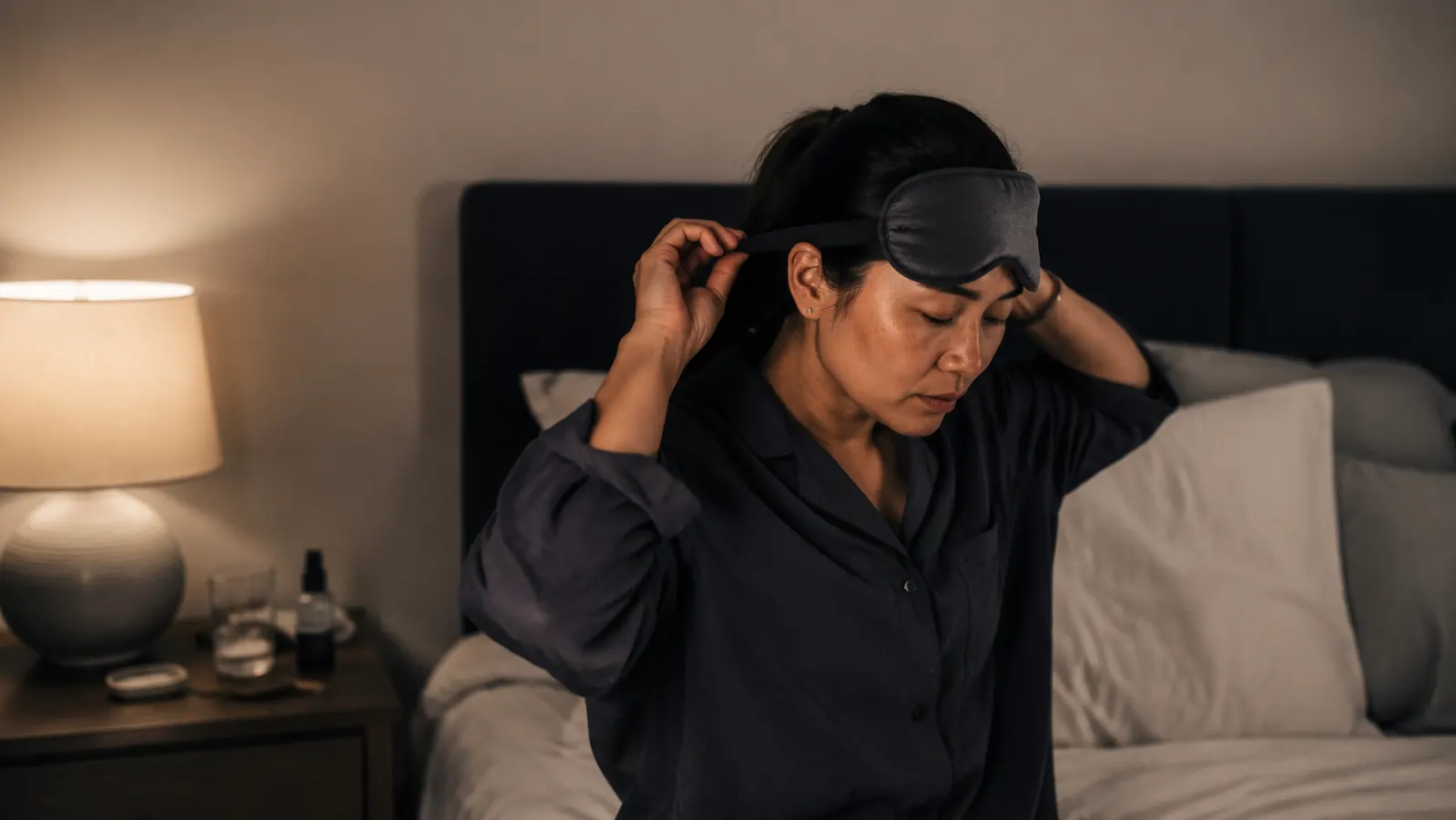
The strap situation on most flat foam masks is a single elastic loop stretched around the head. It is fine when you first put the mask on. By hour four or five, when your head has shifted positions several times, that loop has either slid up toward your hairline or loosened enough to let the mask tilt. The MyHalos uses a wider strap with an adjustable fastener, which means you set the tension once for your head size and it stays there through the night. This sounds like a minor detail until you have woken up at 2am with your mask sitting sideways on your face.
The strap width also matters for hair. A thin single-loop elastic can tangle in longer hair and create a knot you deal with in the morning. The wider, softer strap on the MyHalos distributes the tension across more surface area and is less likely to catch or pull. For patients who wear their hair in a braid or low bun to bed, this has come up more than once as a practical reason to switch designs.
Who Should Buy the MyHalos 3D Mask
This mask is the right choice for side sleepers, shift workers going to bed in daylight, anyone with sensitivity around the eye area, and people who have tried flat masks and still wake up from light. It is also a good fit for anyone doing dry eye drops before bed, wearing contact lenses, or recovering from any kind of eye procedure where pressure during sleep is something their doctor has flagged. The 4.7-star rating across more than 21,000 reviews is not built on back-sleepers in completely dark rooms. It is built on people who had a real light problem and needed a mask that would actually solve it.
The material worth noting is that the inner surface of the MyHalos is soft enough to wear against bare skin without irritation even on sensitive complexions. Some 3D masks use a harder plastic shell with a thin fabric layer that can leave pressure marks along the cheeks. The MyHalos inner surface is padded and the contact points are narrow, so most people do not have marking issues even after a full eight hours. If you have tried a different 3D mask in the past and found it left red lines along your face in the morning, this one is worth trying as a comparison before you write off the format entirely.
At the current price, the MyHalos is also not a commitment that requires deliberation. It costs less than a single gas station energy drink. If it works, which for most people it does within the first few nights, you have permanently solved an early-waking problem. If it does not suit you, the loss is small. That math is easy.
Who Should Skip the 3D Mask
If you are a strict back sleeper in an already dark room and you own a flat mask that already works, there is no reason to replace it. The 3D design solves problems you do not have. Similarly, if you need something that folds flat for a minimalist travel pack and your hotel rooms have good blackout curtains, a flat mask is the more practical choice. Some people also find the rigid cups slightly claustrophobic initially. This usually resolves within a few nights as the sensation becomes familiar, but if you know you are sensitive to anything that feels enclosed near your face, it is worth knowing the adjustment period exists.
The other case for skipping it is if you have a head size that falls outside a typical adult range. The strap adjusts across a wide range, but very small heads may find even the shortest setting leaves some slack, which affects the perimeter seal. This is rare, but worth checking early return window reviews if fit is a concern for you.
Who Should Buy Which
Buy the MyHalos 3D mask if: you are a side sleeper, you currently wake up from early light even with a mask on, your eyes are sensitive to pressure, or you are a shift worker who sleeps in daylight. It solves the exact problems that flat masks do not.
Buy a flat foam mask if: you are a back sleeper in a genuinely dark room, you need a mask that folds flat in a carry-on with no extra space, or you want a temporary backup you can toss in a bag without worrying about it. A flat mask is a decent enough tool for the right conditions. The trouble is that most people shopping for a sleep mask are not sleeping in the right conditions, which is why they are shopping for a sleep mask in the first place. If light disruption is the problem you are actually trying to solve, the 3D contoured design is the more reliable answer.
If you want to read more about how to get the most out of a contoured sleep mask in different lighting situations, including travel and rooms with unpredictable light sources, I cover that in detail in my guide on how to sleep in any light condition using a sleep mask. And if you want the full breakdown of the MyHalos after six weeks of nightly use, that is in my long-term MyHalos sleep mask review.
If a flat mask is still letting light in at the edges, the MyHalos 3D is the upgrade that fixes the actual problem.
4.7 stars, 21,549+ reviews, budget-priced. The 3D dome cups block light without pressing on your eyes. Adjustable strap stays put all night.
Amazon Check Today's Price on Amazon →