
Every week in my physical therapy practice I talk to at least two or three people who bought a cervical pillow, used it for three nights, decided it made things worse, and stuffed it in a closet. When I ask how long they gave it before quitting, the answer is almost always under a week. And when I ask whether anyone told them what to expect in the first seven to ten days, the answer is almost always no. That gap between what the product listing promises and what the actual experience requires is the honest center of this review. The Osteo Cervical Pillow is a well-built product. But it is also one that a meaningful number of buyers return because nobody told them the truth about how it works.
I am going to cover what the listing skips, what the 1-star reviews have in common, and who this pillow genuinely serves well. If you are looking for a straight accounting of 8 weeks of nightly results and morning stiffness scores, I have covered that in the long-term use results over eight weeks. This piece is for the reader who wants the things nobody says out loud before they put down a significant amount on a pillow.
The Quick Verdict
A structurally sound cervical pillow that genuinely helps back and side sleepers, but only after a ten-day adjustment period that the listing barely mentions and that most buyers are not prepared for.
Amazon Check Today's Price →Still waking up stiff? The Osteo pillow works, but only if the fit is right for you.
The Osteo Cervical Pillow has a 4.3-star rating from more than 20,000 Amazon buyers. It ships with Amazon's standard return window, which matters because the first few nights will not feel like the reviews describe.
Amazon Check Today's Price on Amazon →What the Listing Does Not Tell You
The product page for the Osteo Cervical Pillow leads with neck pain relief, better sleep, and memory foam that adapts to your shape. All of that is technically accurate. What it does not say is that for the first five to ten nights, the pillow may feel like it is doing the opposite of what you bought it for. That is not a defect. It is anatomy. Your neck muscles, ligaments, and soft tissue have spent months or years adapting to the height and angle of whatever you have been sleeping on before this. A pillow that puts your cervical spine into a genuinely neutral position can feel deeply wrong at first because neutral is not what your body is calibrated to.
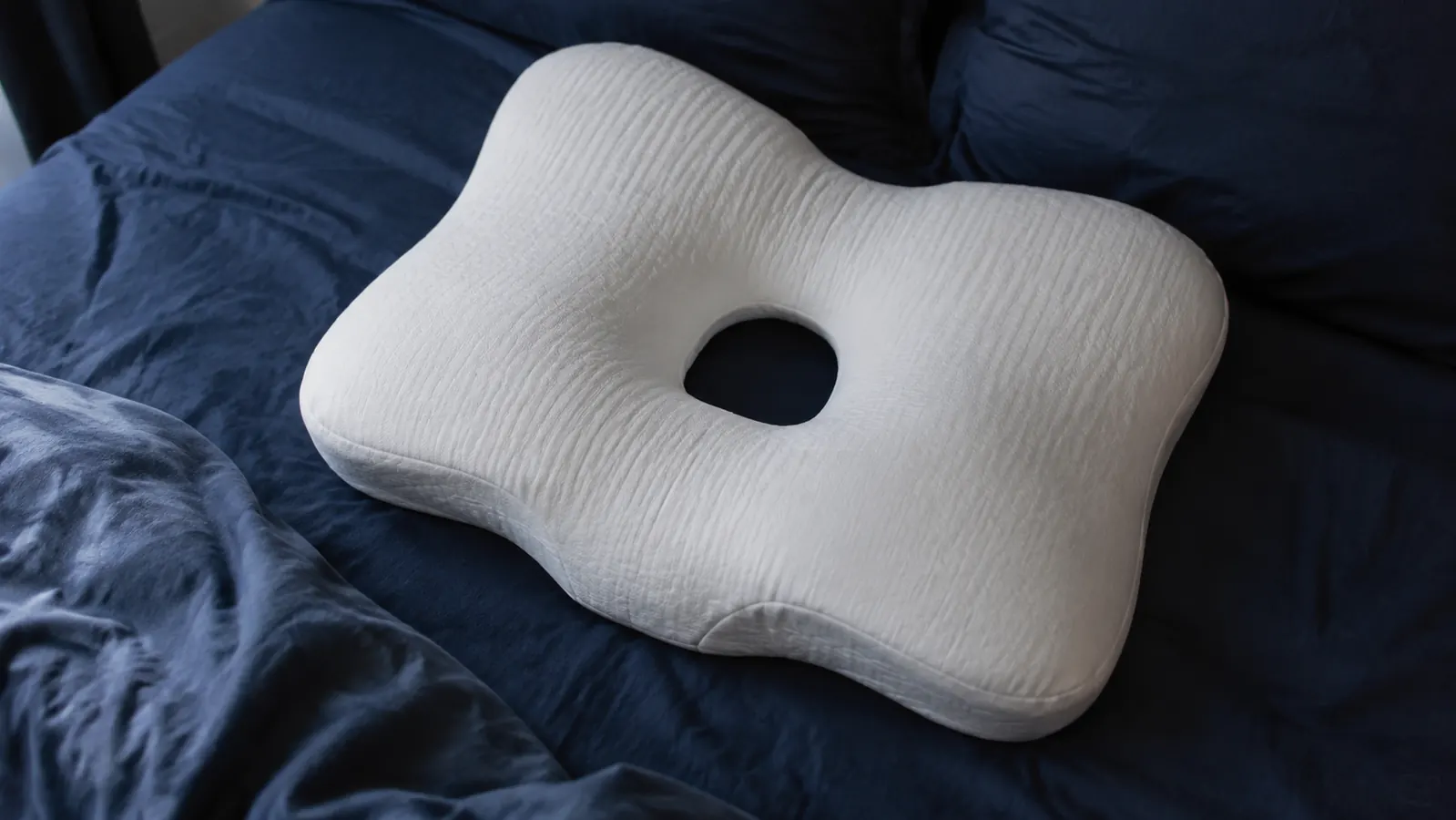
The foam density is the second thing the listing undersells. The Osteo is firm. Not medium-firm. Firm. If you are coming from a standard polyester-fill pillow or a soft gel fiber pillow, the first night can be a mild shock. The material does not compress the way most people expect memory foam to, especially in the raised lobes. The hollow center accommodates the back of the skull well, but the lobes themselves are substantially denser than they look in the product photos. This is actually the right engineering choice for cervical support, but it is worth knowing before you unbox it at 10pm and try to sleep on it for the first time.
The third thing the listing does not address is height fit. The Osteo comes in one configuration. The higher lobe, which is designed for side sleeping, sits at a fixed height that works well for adults roughly between 130 and 200 pounds with average shoulder width. If you are petite with narrow shoulders, the higher lobe may push your head into slight lateral flexion all night, which is the exact problem you are trying to solve. If you are large-framed with broad shoulders and a longer neck, the lower back-sleeping lobe may not quite fill the gap between the mattress and the base of your skull. The pillow does not come with a height-adjustment insert or a shredded fill that lets you customize it. You are working with what is there.
Who Returns It and Why
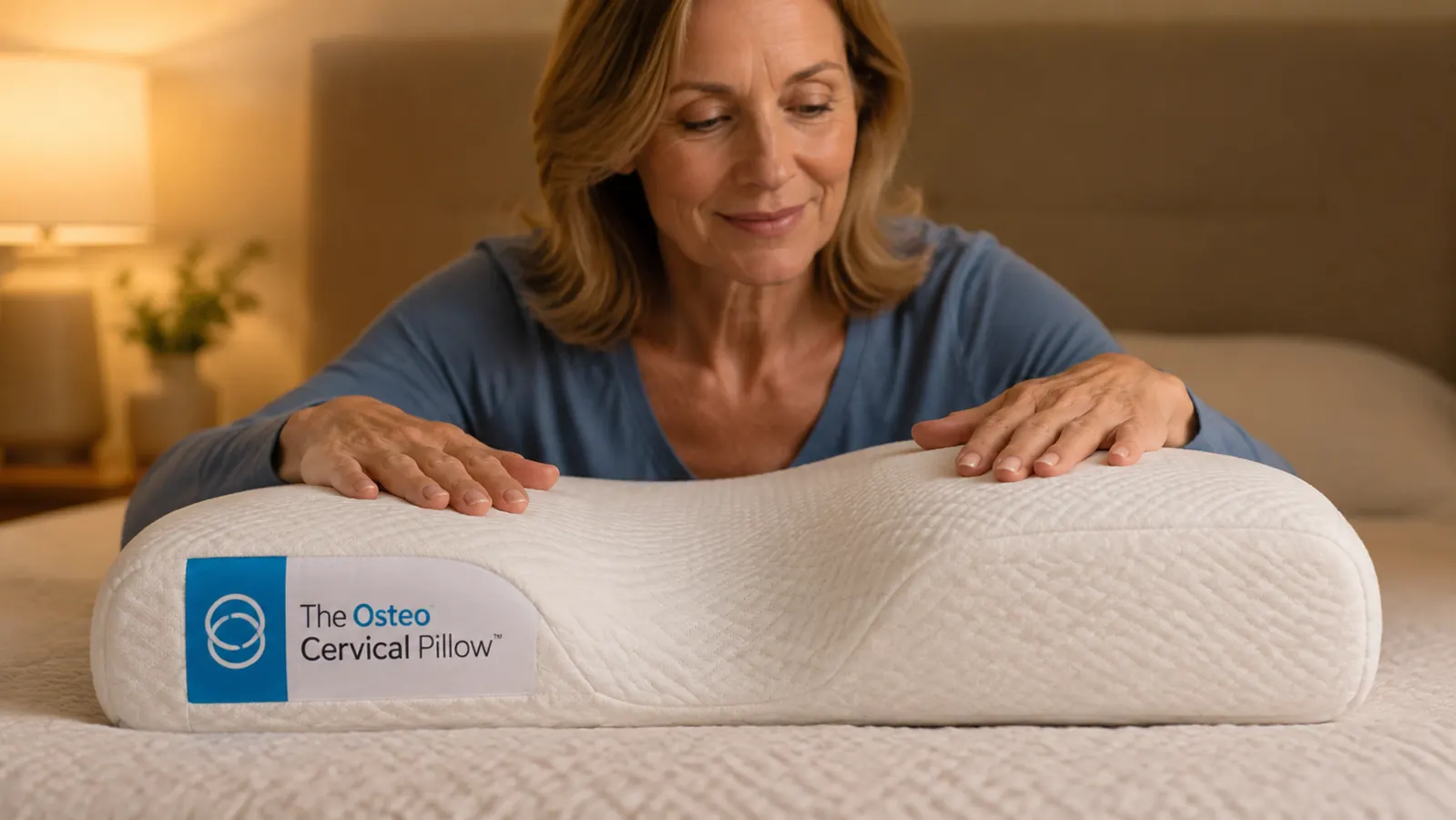
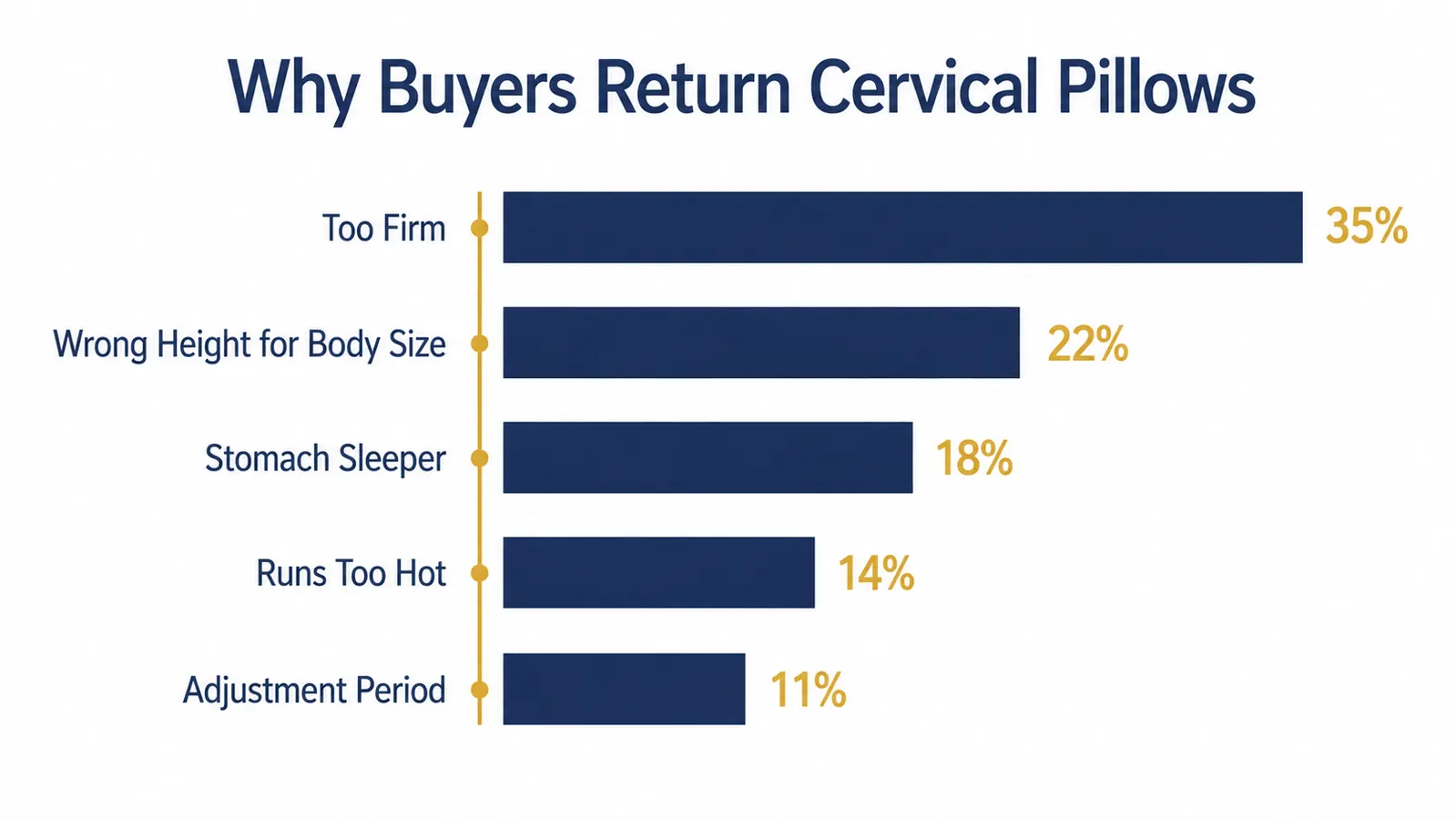
Reading through the 1-star and 2-star reviews on this product is instructive, and I do that with most products I evaluate because the negative reviews show you the failure modes that success stories leave out. The patterns that appear most often in the critical reviews are: too firm to sleep on comfortably, gave it three days and quit, neck felt worse not better, runs too hot, and the lobe is too tall for my frame. What strikes me reading those reviews as a physical therapist is that most of those complaints describe either an anatomy mismatch or an adjustment period that was abandoned before it had a chance to work. Very few describe a product that broke down or failed mechanically.
The firmness complaints almost always come from buyers who expected the feel of a traditional memory foam pillow, which conforms visibly and softly when you press it. The Osteo's foam is denser than that by design. It has to be, because a soft foam lobe would compress under the weight of your head and defeat the purpose of the contoured shape entirely. The lobe height complaints are more legitimate and more anatomy-specific. A petite woman who is five feet one inch and 115 pounds genuinely may not fit the side-sleeping lobe the way a woman who is five feet five and 145 pounds does. That is not a design flaw so much as the unavoidable limitation of a fixed-height product serving a wide range of body sizes.
Stomach sleepers are the clearest mismatch of all. If you primarily sleep face-down, a raised cervical lobe forces your neck into extension, which puts compressive load on the posterior cervical facet joints. Every night. For hours. That is not a recipe for less neck pain. It is a recipe for more. If you are a stomach sleeper who woke up this morning with neck pain and you are hoping a cervical pillow will help, it will not help in your default position. The right move is retraining your sleep position over time, and a cervical pillow is part of that process only if you are willing to shift to your side or back.
Most of the 1-star reviews on this pillow describe a real adjustment period that the buyer did not know was coming, not a product that failed. That is a communication problem, not a manufacturing one.
The Firmness Question: Why It Feels Wrong Before It Feels Right
The clinical explanation for why this pillow can feel uncomfortable in the first week is worth understanding because it is the thing most likely to make you give up prematurely. When a structure like a muscle or ligament has been held in a particular position for a long time, it develops what clinicians call a resting length bias. If your old pillow was too low and let your head drop toward the mattress during side sleeping, your cervical muscles adapted to that position. Stretching them back toward neutral, which is what the Osteo lobe is doing by holding your head at a more appropriate height, creates mild tension and sometimes soreness in the first several nights.
That discomfort usually peaks around day three or four and then begins to ease. By day seven to ten, most people who are the right anatomical fit for this pillow stop noticing the firmness and start noticing that they feel less compressed in the morning. The buyers who return it almost always quit before that crossover point. If you are on day four and your neck feels worse than when you started, that does not necessarily mean the pillow is wrong for you. It may mean you are exactly at the peak of the adaptation window and walking away just before it gets better.
The one exception to this is true anatomical mismatch. If the higher lobe is visibly pushing your head out of alignment when you look in the mirror from the front, or if you are waking up with headaches that begin at the base of the skull, those are signs the lobe height is too much for your frame. That is different from general adaptation discomfort, and it is a reason to return the product rather than push through. The distinction matters: adaptation soreness feels like mild muscle fatigue in the neck and upper trapezius. Height mismatch feels like your neck is being cranked sideways or your head is being pushed forward.
Heat Retention: Manageable, But Real
The Osteo does not have gel infusion, phase-change materials, or ventilation channels in the foam core. It is a solid high-density memory foam block, and solid high-density memory foam holds heat. In mild weather that is largely a non-issue. In warm weather, or for anyone who already runs hot at night, the pillow will add warmth to the sleeping environment. Not dramatically, but noticeably. The removable pillow cover is the place to compensate for this. A bamboo or Tencel pillowcase, which both wick moisture and release heat faster than standard cotton, makes a real difference on warm nights and is an inexpensive addition relative to the cost of the pillow itself.
This is worth flagging specifically because several of the critical reviews mention waking up uncomfortably warm and attributing it to the pillow. The foam is part of the equation but the cover material amplifies or dampens the effect significantly. If you are ordering the Osteo and you know you run warm, order a cooling pillowcase at the same time rather than discovering the problem after the fact.

What Happens When the Fit Is Right
For the people who are well-matched to this pillow and who commit to the adjustment window, the results are real and they show up in straightforward ways. Morning stiffness decreases. The heavy-headed, compressed feeling that many desk workers and drivers know well after a night on an inadequate pillow becomes less common and then largely disappears. The reason is mechanical: the contoured shape maintains the natural inward curve of the cervical spine during sleep rather than letting it flatten or curve the wrong direction for six to eight hours. Over weeks, that sustained improvement in overnight position translates into tissue that is less compressed and less irritated when you wake up.
Back sleepers often see the fastest results because the hollow center of the Osteo addresses the most common back-sleeping problem directly. When a standard pillow is too thick, it pushes the head forward into flexion all night, which loads the posterior neck structures and leads to the groggy, stiff feeling in the morning. The hollow removes that compression on the back of the skull while the foam surrounding it supports the neck from underneath. For a back sleeper with an otherwise average-sized frame, this pillow often clicks into place within the first week rather than requiring the full ten-day adjustment.
Side sleepers take a bit longer because the lobe height has to match shoulder width to achieve a neutral cervical position, and that fit is more variable between bodies than the back-sleeping configuration. If you want a deeper look at how the cervical pillow design changes the geometry compared to a flat pillow, the breakdown of how a cervical pillow compares to a standard one covers the height, curve support, and position mechanics in detail.
What I Liked
- Dense foam holds its contoured shape and does not flatten over time the way soft-fill pillows do
- Hollow center prevents skull-base compression for back sleepers, reducing the groggy morning feeling
- Genuinely low odor from the first night, unlike many new foam products
- Removable zippered cover washes well and holds up without pilling or zipper failure
- Amazon return window gives buyers enough time to get through the adjustment period before committing
- Dual-height design handles side and back sleeping without needing separate pillows for each position
Where It Falls Short
- No height adjustment option, which means petite adults or broad-shouldered adults may not get an ideal fit
- Firmness feels wrong for the first five to ten nights, which causes a significant number of returns before the product has a fair chance
- Retains heat and is not ideal for warm sleepers without a cooling pillowcase
- Stomach sleepers should not use this pillow at all
- One fixed configuration does not accommodate all body proportions equally well
Who This Is For
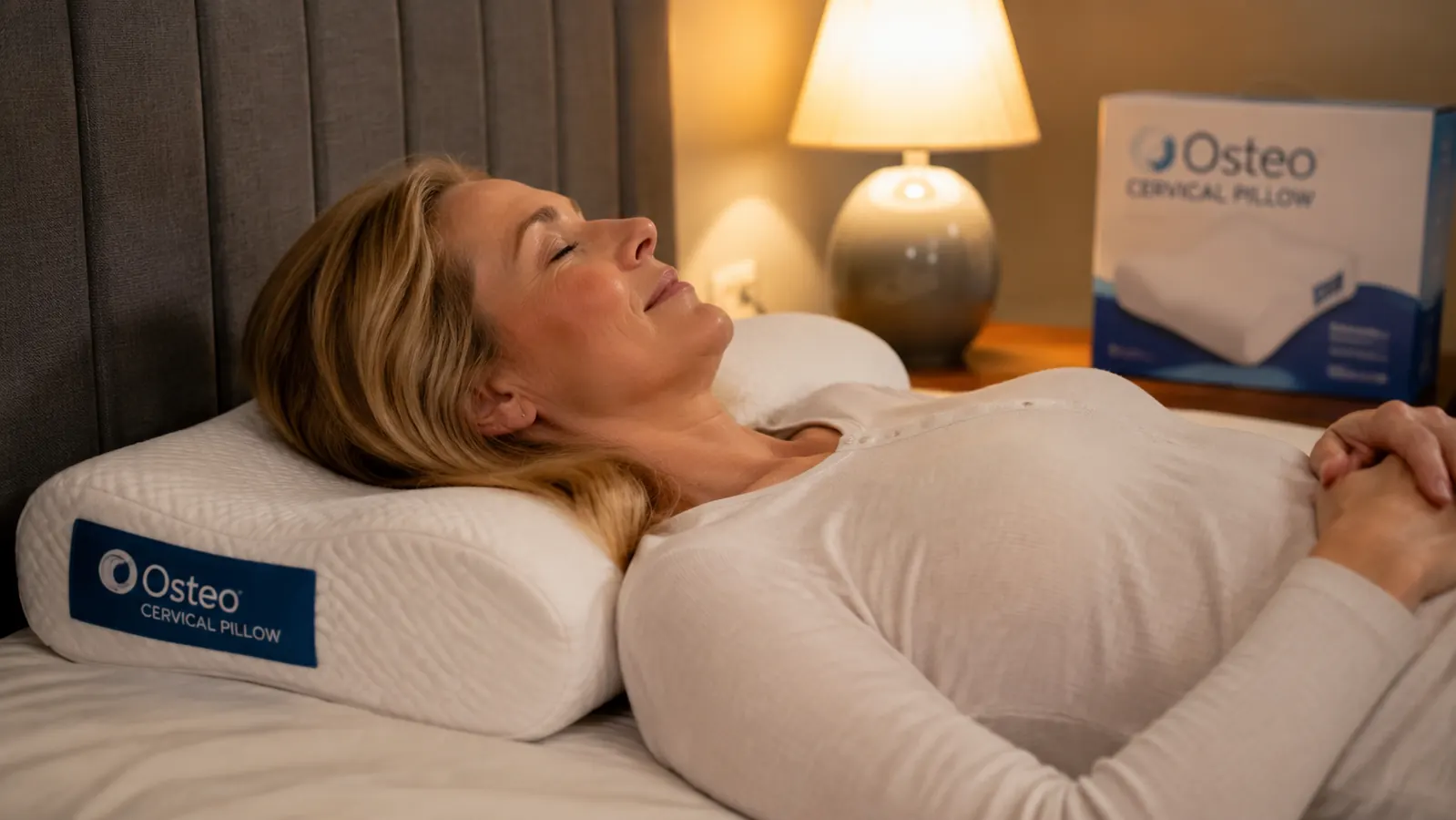
The buyers most likely to keep this pillow and see lasting benefit are average-to-larger-framed adults who sleep primarily on their back or side, wake up with neck stiffness or shoulder tension, and are willing to commit ten full nights before making a judgment call. People who have been told by a clinician to support their cervical curve during sleep are a strong match. People who have woken up with tingling or numbness in one arm after sleeping on their side, a pattern that often reflects cervical nerve compression from inadequate lateral head support, are also good candidates because the side-sleeping lobe addresses exactly that height and support gap.
Who Should Skip It
Stomach sleepers, hot sleepers who do not want to invest in a cooling pillowcase, petite adults under about 120 pounds with narrow shoulders, and anyone who is not prepared to push through the first week of adjustment should look elsewhere. This is also not the right product for someone with a diagnosed cervical disc herniation or cervical stenosis who has not consulted a physical therapist or physician about what type of pillow support is appropriate for their specific diagnosis. A general consumer cervical pillow is designed for mechanical tension from poor positioning, not for clinical management of structural spine conditions. Those situations need individualized assessment first.
If the shape works for your sleep position, this is the pillow worth the adjustment.
The Osteo Cervical Pillow has over 20,000 ratings on Amazon and a 4.3-star average. If you are an average-to-larger-framed side or back sleeper who wakes up stiff, it is worth checking the current price and reading the recent reviews for your body type before deciding.
Amazon Check Today's Price on Amazon →