

Most people with neck pain are sleeping on the wrong pillow. Not a bad pillow. Not an old pillow. Just the wrong shape for how their spine needs to rest at night. I see this in my physical therapy practice constantly: someone comes in with chronic morning stiffness, we talk through their sleep setup, and it turns out they have been using a regular bed pillow for thirty years without ever questioning whether it was actually helping. The pillow is not broken. It just was never built for this job.
The short answer here is that the Osteo Cervical Pillow and a regular pillow are not really doing the same job. A regular pillow fills the space between your head and the mattress. A cervical pillow actively supports the curve of your cervical spine throughout the night. If your neck hurts in the morning, that difference matters quite a lot. This comparison will walk you through exactly what each pillow does, where one wins over the other, and who should actually make the switch.
| Osteo Cervical Pillow | Regular Pillow | |
|---|---|---|
| Shape | Contoured with hollow center and two raised ridges for back and side sleeping | Flat or lofted rectangle with no anatomical shaping |
| Material | Hollow-design odorless memory foam with breathable knit cover | Varies: polyester fill, down, or standard memory foam block |
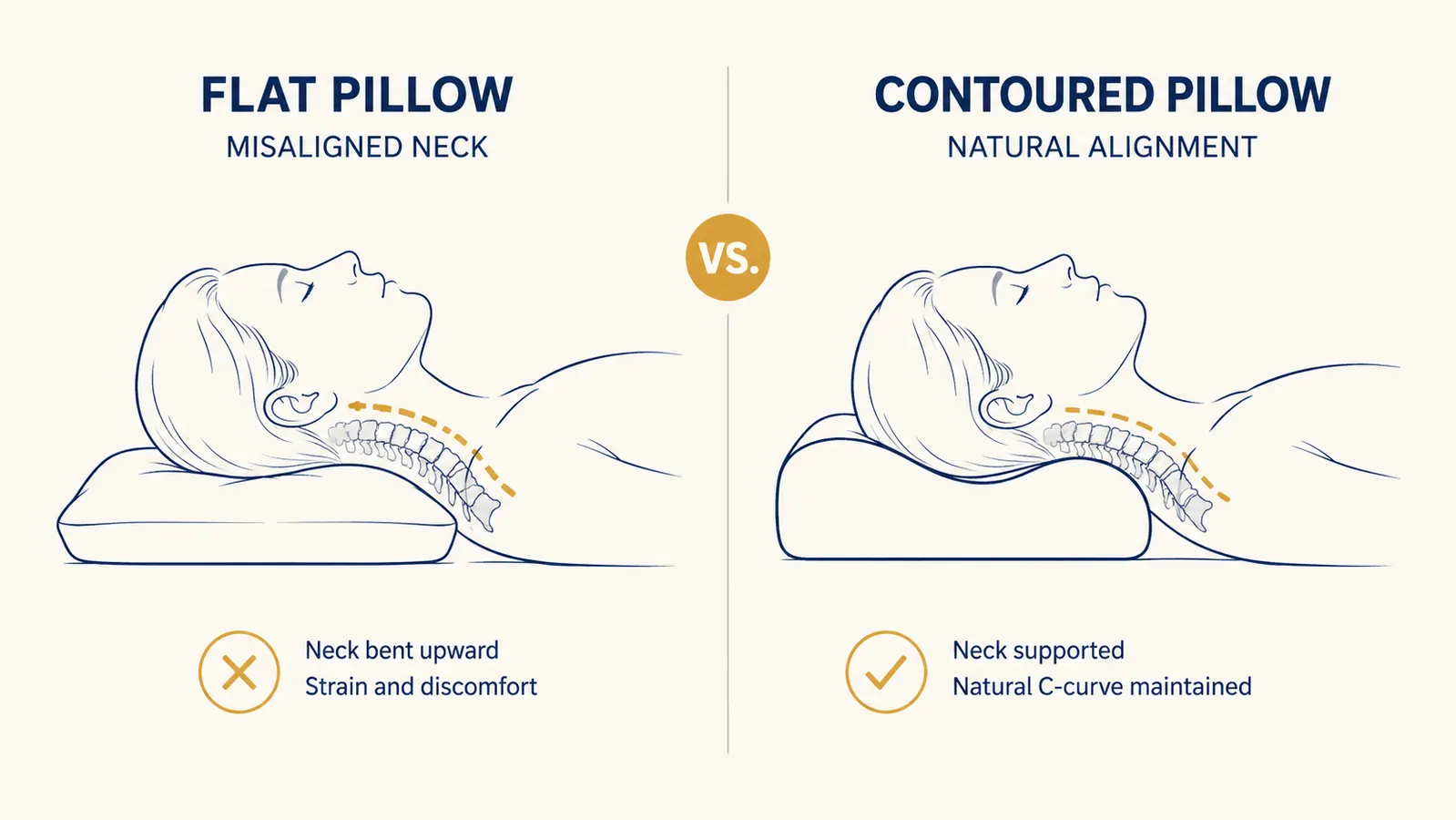
| Cervical Spine Support | Cradles the natural C-curve of the neck during back sleeping | Pushes the head forward or sideways depending on fill compression |
| Pressure on Neck Muscles | Low: neck muscles can fully relax because the curve is supported passively | Higher: muscles work to maintain position as fill shifts through the night |
| Side Sleeper Fit | Taller ridges on the edges fill the shoulder-to-ear gap for neutral alignment | Depends on loft; most compress too much or prop head too high |
| Back Sleeper Fit | Hollow center keeps the back of the head low while the ridge fills the neck gap | Head rests higher than the neck, flattening or straining the cervical curve |
| Odor at Unboxing | Minimal: marketed as odorless, most users report little to no off-gassing | Varies: synthetic fills can off-gas; down can smell musty over time |
| Washability | Cover is removable and machine washable; foam core is spot-clean only | Most are machine washable in full, though this compresses fill permanently |
| Adjustment Period | 1 to 2 weeks to acclimate to the contoured shape, especially for stomach sleepers | None needed; familiar feel from the first night |
Where the Osteo Cervical Pillow Wins
The core advantage is that the Osteo holds the shape of your neck so your muscles do not have to. A regular pillow, no matter how fluffy or expensive, is a passive lump. It responds to your head's weight by compressing. As the fill shifts through the night, your cervical spine drifts out of neutral. Your neck muscles fire small stabilizing contractions to compensate. You do not notice because you are asleep. But you feel it when you wake up stiff, and you carry that tension into the first two hours of your morning.
The Osteo's hollow center is specifically designed for back sleepers: your head rests in the lower valley while the raised ridge fills the gap between the back of your neck and the mattress. That is not a gimmick. That is how cervical support is supposed to work. As a PT, I can tell you that maintaining the natural C-curve of the cervical spine during sleep is one of the most important factors in waking without pain. The Osteo's contour does this passively, which is what you want at 2 AM when you are not consciously thinking about posture.
Side sleepers also benefit significantly. The taller edges of the Osteo fill the space between the shoulder and the ear, keeping the head from dropping toward the mattress or tilting up at an angle. Most regular pillows compress under the weight of the head and leave that gap unfilled by the time an hour has passed. The Osteo holds its shape because it is foam, not compressible fill. That structural consistency across the whole night is the actual point.
If your neck hurts in the morning and you have never tried a cervical pillow, this is the one to start with.
The Osteo Cervical Pillow has 4.3 stars across more than 20,000 verified Amazon reviews. Most buyers who stuck with it past the first two weeks report significantly less morning stiffness.
Amazon Check Today's Price on Amazon →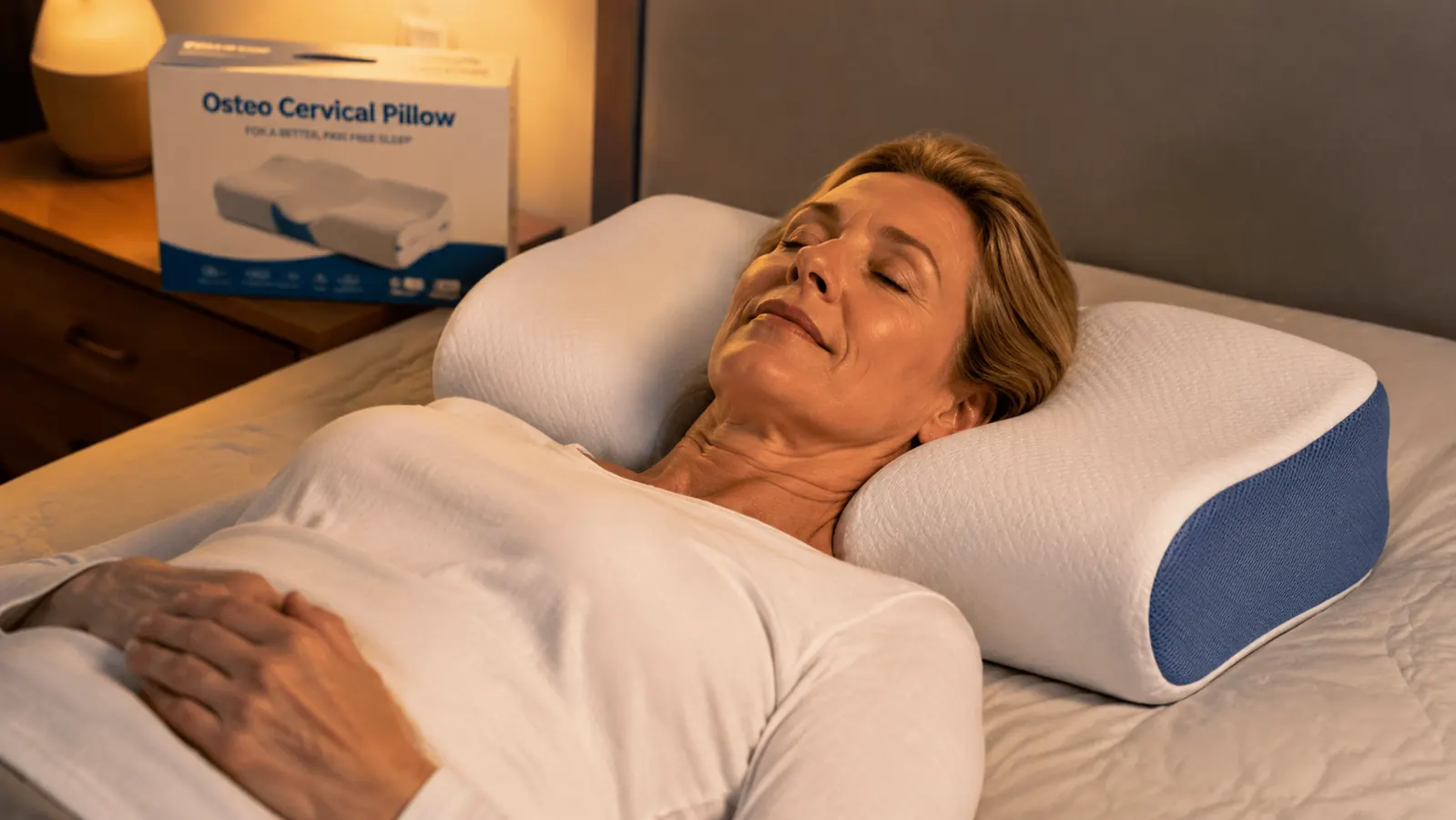
Where a Regular Pillow Wins
I am not going to pretend a regular pillow is useless. For stomach sleepers, a thin, soft regular pillow is actually the safer bet. Stomach sleeping is rough on the cervical spine regardless of pillow choice, but a very flat, compressible pillow reduces the degree of rotation your neck has to hold all night. The Osteo is not designed for stomach sleeping at all, and trying to use a contoured pillow face-down puts the raised ridges in exactly the wrong place.
Regular pillows also win on familiarity and cost. You can find a decent standard pillow for an affordable price, and if you are not dealing with morning neck pain, there is no compelling reason to spend more. The first night on a contoured cervical pillow can also feel strange. The foam does not give the way fill does, and if you have been a regular-pillow sleeper your whole life, your body expects to sink. Some people genuinely cannot adjust, and they end up sleeping on the Osteo for a week and then going back to what they know. That is not a failure of the product. It is just how habits in the body work.
A regular pillow fills the space. A cervical pillow supports the structure. For neck pain, those are not the same thing.
What the Osteo's Hollow Design Actually Does
The marketing says the Osteo uses a hollow design to reduce heat and odor while improving airflow. That is mostly true in practice. Memory foam pillows have a reputation for trapping heat, and this design does help with that compared to a solid memory foam block. The hollow core also means less material pressing against your neck and skull, which some people find more comfortable than the dense pressure of a traditional foam pillow.
The odorless claim holds up reasonably well. Many memory foam products off-gas noticeably when new. The Osteo's hollow construction means less foam overall, and most buyers report a milder smell than they expected. Leaving the pillow to air out for 24 to 48 hours before first use is still worth doing, but it is not the weeks-long airing process some solid foam pillows require.
What it does not do is automatically fix neck pain. I want to be clear about this because the marketing can oversell it. If your neck pain comes from a disc problem, facet joint inflammation, or muscle injury, a better pillow supports your healing but does not replace treatment. What the Osteo does exceptionally well is remove the nightly aggravation that a regular pillow creates by letting your cervical spine drift out of alignment for seven or eight hours at a stretch.

The Real Cost of Sleeping Wrong Every Night
Here is the math people do not do. A regular pillow costs between fifteen and forty dollars. A cervical pillow like the Osteo is in a higher range. At first glance, the regular pillow wins on price. But if you are waking up stiff five mornings a week and that stiffness is driving you to ibuprofen, heating pads, or twice-monthly massage appointments, the math inverts quickly. One massage visit in most cities costs more than the Osteo itself. If better sleep alignment means you need that massage once a month instead of twice, the pillow pays for itself in the first month.
The more honest calculation is about quality of life. How much of your morning is spent working out the kink in your neck before you can focus? If that number is thirty minutes most days, that is roughly three and a half hours of fog per week. Over a year, that adds up to more lost function than most people realize. A pillow that reduces that cost is not a luxury. It is one of the more efficient investments you can make in how you feel day to day.
Who Should Buy the Osteo Cervical Pillow
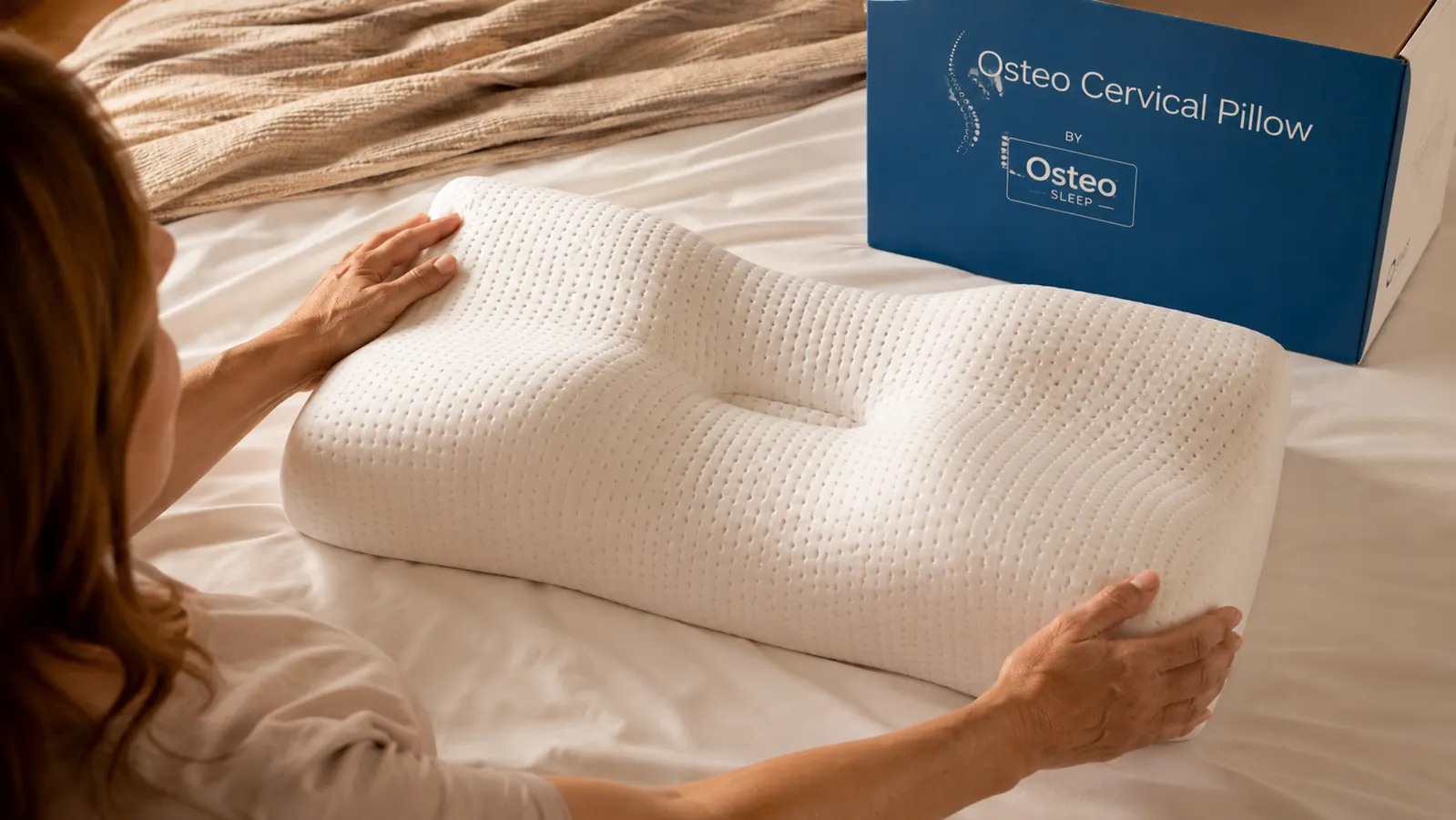
Buy the Osteo if you wake up with neck stiffness, upper back tension, or a headache at the base of your skull most mornings. Those are classic signs of cervical spine loading during sleep. You do not have to be in serious pain. Even mild daily stiffness that takes an hour to clear after you get up is worth addressing, and the pillow is a low-cost intervention compared to physical therapy visits or chiropractic care.
It is a particularly good fit for back sleepers and side sleepers who tend to stay in one position through the night. If you are someone who knows you wake up in roughly the same position you fell asleep in, the contoured design will work with your body rather than fighting it. Back sleepers are probably going to feel the biggest difference fastest, because that is the position the Osteo is most precisely shaped for.
Parents, shift workers, and people whose sleep is already disrupted by external factors (a pet who jumps on the bed, an early alarm, a baby) will find the Osteo helps them make the most of whatever sleep they do get. When you only have five hours, you really cannot afford for those hours to leave you tighter than when you lay down.
Who Should Skip It
Stomach sleepers should not buy this pillow. Full stop. The contour design is built around back and side sleeping positions. If you sleep primarily on your stomach, the raised ridges will work against your neck rather than for it.
Restless sleepers who rotate through half a dozen positions every night may also struggle. The adjustment period for the Osteo is real, typically one to two weeks. If you tend to give up on new sleep products after three nights because they feel different, you might want to manage your expectations going in. Give it ten nights minimum before deciding it is not for you.
And if your neck pain is acute, meaning it started recently from an injury and is actively inflamed, please talk to a physical therapist or your doctor before assuming a pillow change is the right first step. A new pillow is a long-term solution for chronic positional problems. It is not emergency care.
Still waking up stiff? The Osteo is worth trying before you book another massage.
It has over 20,000 reviews and a 4.3-star rating on Amazon. The hollow memory foam design, removable washable cover, and contoured shape for back and side sleepers make it one of the most practical cervical pillows at this price point.
Amazon Check Today's Price on Amazon →