
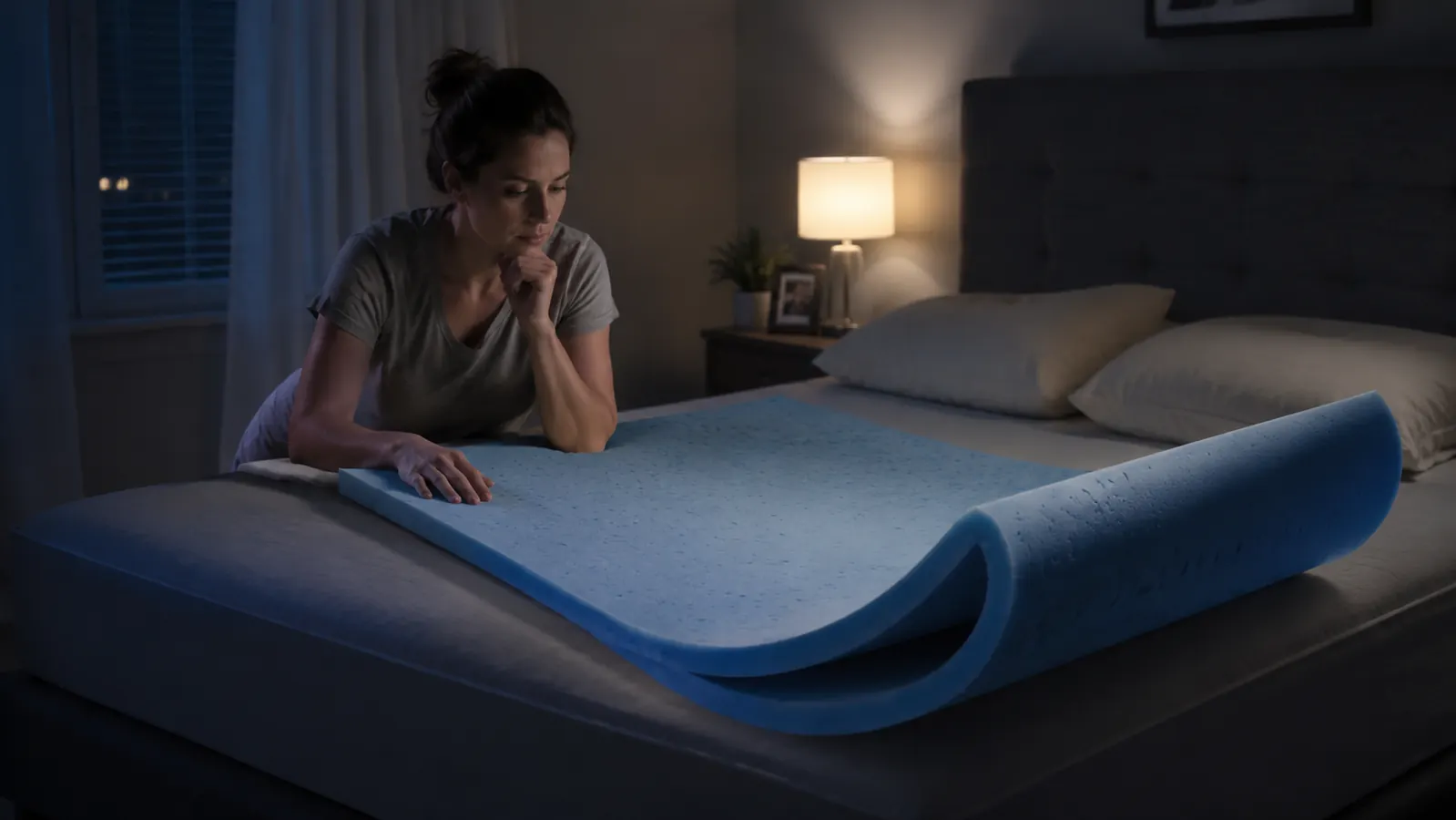
When something has over 103,000 Amazon ratings, you stop asking whether people buy it and start asking a different question: why do some of them return it? I have worked with bodies for seventeen years as a physical therapist. I know what makes a sleeping surface work and what makes it fail by 3 AM. So before I ever put the Lucid 3-inch cooling gel memory foam topper on a bed, I spent an afternoon reading the one-star and two-star reviews on Amazon. Not to talk myself out of it. To find out what the product listing chooses not to mention.
What I found was consistent. The complaints cluster around four things: a chemical smell that arrives with the topper and stays longer than most reviewers expected, heat that builds quietly through the night and hits you around the third or fourth hour, edge softness that surprises people who sit on the side of the bed to put on their shoes, and frustration from buyers who had a sagging mattress and assumed the topper would level it out. If any of those apply to your situation, keep reading. This review is built around those four problems specifically, because that is where honest buying decisions live.
The Quick Verdict
The Lucid topper does what it promises for the right buyer. But the listing skips four real drawbacks that send a meaningful percentage of customers straight to return shipping. Know them before you order.
Amazon Check Today's Price →You've seen the 100,000 ratings. Here's what they leave out.
Read this review first, then decide. If the Lucid 3-inch cooling gel topper is still the right fit after you've seen its real limitations, the current price and size availability are linked below.
Amazon Check Today's Price on Amazon →The Off-Gassing: What the Listing Calls 'New Foam Smell' and What It Actually Is
Memory foam off-gassing is a known issue across the category. Foam toppers and mattresses are manufactured with a range of chemical compounds, some of which release as volatile organic compounds when the material is first decompressed. The Lucid topper ships vacuum-sealed and rolled. When you cut the packaging, the foam expands rapidly and those compounds begin releasing. The smell is somewhere between fresh paint and the inside of a new car, chemical and distinctive.
The product listing uses soft language here. It mentions a 'new foam smell' and suggests airing the topper out before use. What it does not tell you is the timeline. In my experience, and corroborated by a large chunk of the one-star reviews, the smell is noticeable for five to ten days depending on ventilation and room size. In a small bedroom with limited airflow, that is a full week of sleeping in a chemically scented room. Some people barely register it. Others find it genuinely disruptive. If you have a partner who is smell-sensitive, a young child in the room, or any respiratory condition, treat this as a meaningful variable rather than a minor nuisance.
The practical answer is simple: unroll the topper in a garage, sunroom, or any space with windows you can open, and leave it there for 48 to 72 hours before moving it to your bedroom. This step alone eliminates most of the complaints in that category. But it requires space and planning, and the product page does not make that necessity clear.
Heat Retention: Where the Gel Infusion Helps and Where It Reaches Its Limit
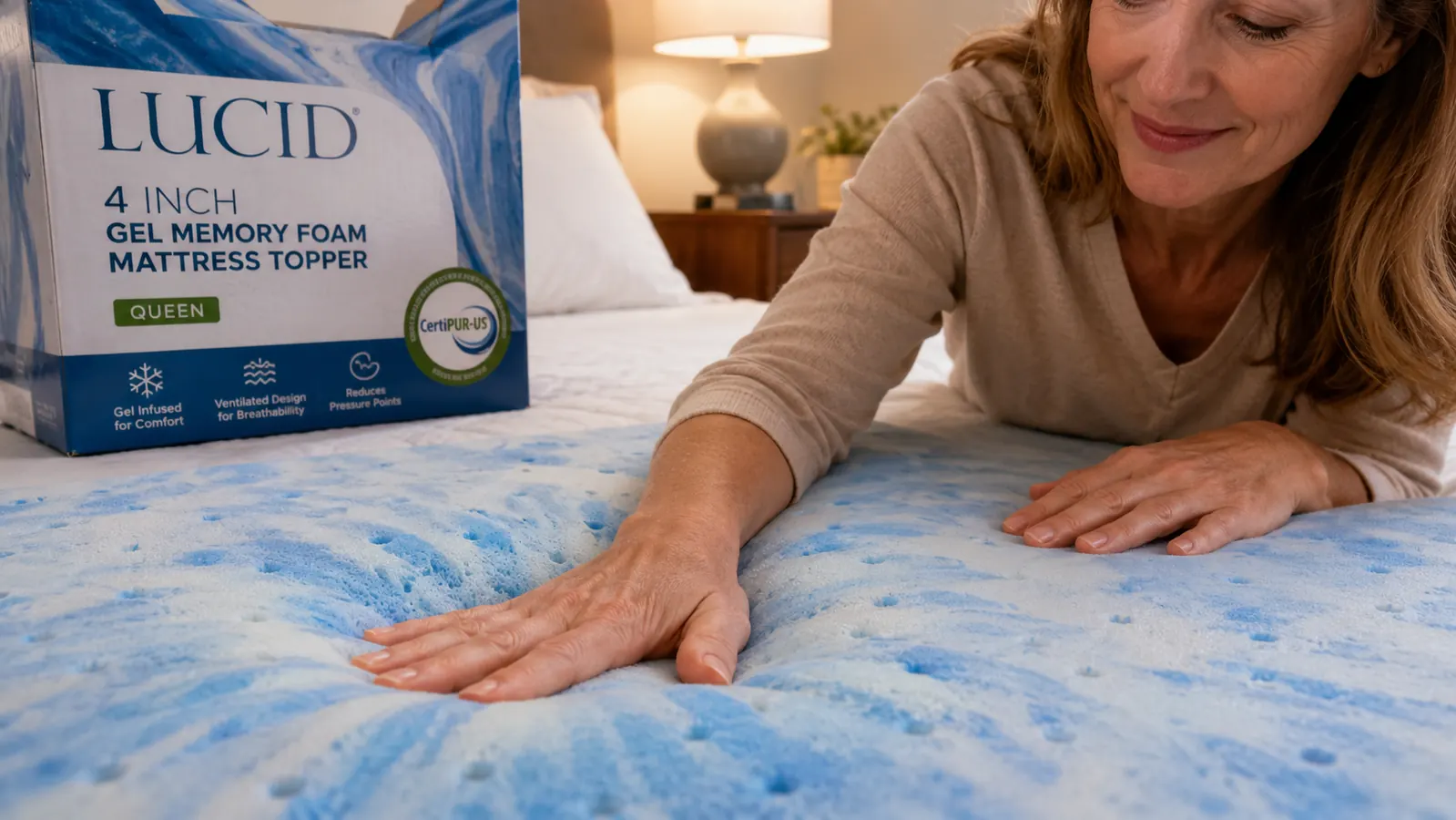
The word 'cooling' in the product name is doing real work but it is also setting expectations that require some calibration. Gel infusion in memory foam operates on a specific mechanism: the gel beads or gel swirls worked into the foam have higher thermal conductivity than the surrounding foam cells, so heat moves through them faster and disperses rather than pooling immediately beneath your body. Open-cell foam construction also allows some air movement as you shift during the night. Both of those things are real and they genuinely help.
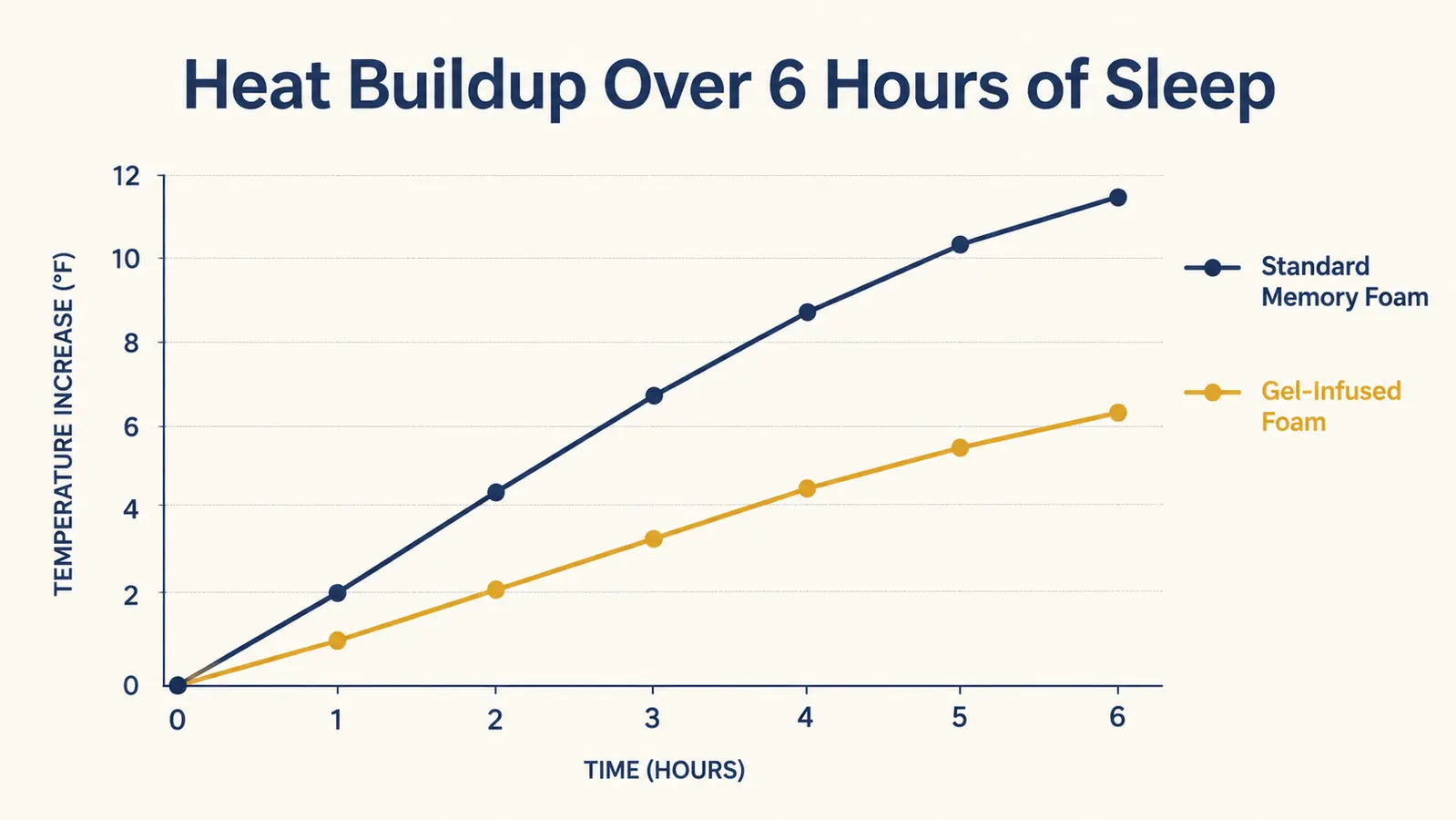
Here is where the limit is: the gel infusion slows the heat buildup. It does not eliminate it. Memory foam still responds to body heat to soften, which means it is actively absorbing warmth from your body all night. For most sleepers in a climate-controlled bedroom, the gel buys enough time that the heat buildup stays manageable through a full sleep cycle. For hot sleepers, the math is different. If you already run warm, if you live somewhere that gets humid in summer, or if your bedroom tends to stay above 70 degrees at night, the gel slows the problem down but does not solve it. Expect to feel warmth radiating up from the topper by the three-to-four-hour mark on warm nights.
The gel infusion slows the heat buildup. It does not eliminate it. For hot sleepers in warm rooms, expect warmth building from the topper by hour three or four. Know that going in.
The fix is pairing this topper with a moisture-wicking sheet cover rather than a standard cotton fitted sheet. A bamboo or Tencel sheet layer between you and the topper adds meaningful breathability. Some buyers also use a thin topper cover specifically designed for ventilation. Neither of those fixes is mentioned in the product listing. They are just things you figure out after the first sweaty night.
The Sagging Mattress Problem: What a Topper Can and Cannot Do
This one generates more one-star reviews than anything else, and it is almost entirely a mismatch between what buyers hoped for and what the product physically does. A mattress topper sits on top of your mattress. It does not have any structural rigidity. It conforms to the surface beneath it, which means if that surface has a depression, a valley, or an uneven zone, the topper will follow that shape, not correct it.
Buyers with a clearly sagging mattress, the kind with a visible indent in the middle from years of the same sleeping position, frequently report that the Lucid topper did nothing for that problem. They are correct. The three inches of foam compress around the existing depression. You end up with softer foam conforming to the same bad shape. The only way a topper addresses sagging is if the sagging is so mild it falls within the foam's ability to distribute weight across a broader area. Moderate to severe sagging requires a new mattress or a foundation fix, not a topper.
A useful test before buying: place a straight-edge across your mattress surface where you sleep. If you can see a clear gap between the straight-edge and the mattress greater than about an inch and a half, a topper is unlikely to solve your problem. The Lucid topper works best when the mattress underneath is structurally intact but has simply lost its comfort layer softness over time.
Edge Support: The Thing Nobody Mentions Until They Sit Down
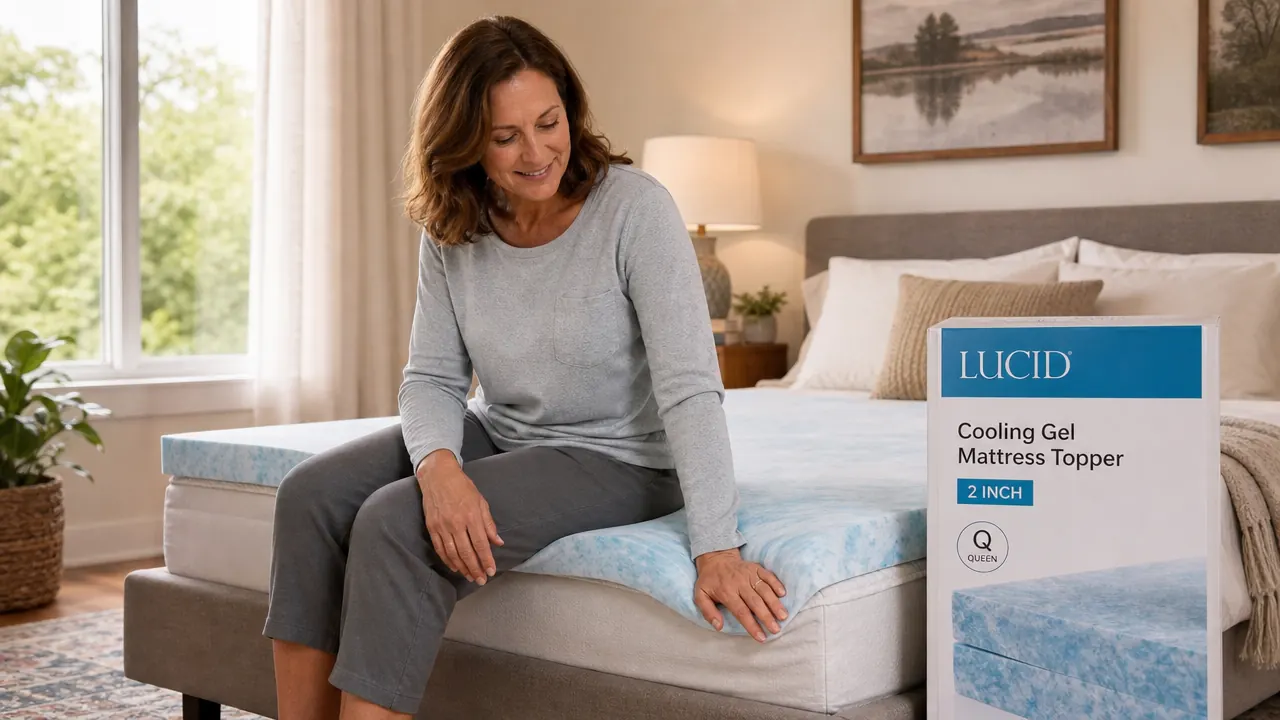
Memory foam toppers have no internal support structure. The foam is consistent throughout, which means the edges of the topper behave exactly like the middle of the topper under pressure: they compress. When you sit on the side of the bed to get up, get dressed, or put on shoes, the topper edge compresses fully and the outer few inches of foam angle downward over the mattress edge. This is not a defect. It is the physics of a thick foam layer without any perimeter reinforcement.
For most sleepers it is a minor inconvenience. For people who sit on the bed edge regularly, sleep close to the edge, or have mobility considerations that make a firm launch point important in the morning, it is a real problem. Sitting on the edge of this topper and trying to push up to standing feels noticeably less stable than sitting on the mattress edge alone. As a physical therapist I notice this specifically because many of my patients with hip or knee issues use the edge of the bed as a push-off point. A topper with no edge support makes that harder.
Who Returns This Topper and Why
After reading through the negative reviews and thinking about the four categories above, the returns cluster into identifiable groups. Hot sleepers who did not check temperature performance claims carefully return it most often. They expected cooling and got a warmer surface than their bare mattress on summer nights. The second largest return group is buyers with a sagging mattress who hoped the topper would smooth things out. It did not, because a topper cannot. The third group is smell-sensitive buyers who opened the package in their bedroom and found the off-gassing genuinely unlivable for the first week.
The fourth group is smaller but worth naming: people who prefer a firm, fast-response sleep surface. Memory foam has a slow, enveloping quality. You sink in and the foam holds you. Some people find this deeply comfortable. Others find it confining or difficult to shift positions during the night. If you have always slept on a firm innerspring and liked it, there is a reasonable chance you will not enjoy the sensation of a three-inch memory foam topper, regardless of how well it performs on pressure relief metrics.
What I Liked
- Three full inches of foam provide real pressure relief at the hip and shoulder for side sleepers on a worn surface
- Gel infusion genuinely slows heat buildup compared to standard memory foam, making it workable for moderate-temperature sleepers
- Ships vacuum-compressed and rolls out easily, which matters when you are getting it upstairs to a bedroom alone
- Over 103,000 ratings at 4.4 stars represents a volume of consumer data that is actually informative, not just a marketing number
- Price point makes it a reasonable bridge option for people extending the usable life of a structurally sound but worn mattress
- Fits under a standard fitted sheet without special anchoring on most queen mattresses
Where It Falls Short
- Off-gassing chemical smell is strong for five to ten days and requires proactive airing out in a separate room before bedroom use
- Heat builds meaningfully for hot sleepers after three to four hours, despite the gel infusion, particularly in warm weather
- Cannot correct mattress sagging; the foam conforms to depressions in the surface beneath it rather than bridging them
- Edge support drops significantly because the foam compresses fully at the perimeter with no reinforcement
- Memory foam's slow sinking feel is a strong preference divide; people who like firm, responsive surfaces often dislike it
- Durability past two or three years of nightly use is an open question the product listing does not address
A Note on the CertiPUR-US Certification and What It Does and Does Not Mean
The Lucid topper carries a CertiPUR-US certification, which the product page highlights. This certification means the foam has been tested and meets standards for low emissions of volatile organic compounds, is free of certain heavy metals and flame retardants, and does not contain ozone-depleting chemicals. That is genuinely meaningful and worth noting. What the certification does not mean is that the foam has no off-gassing at all. It means the off-gassing compounds present fall below defined safety thresholds. The smell is real. The certification simply tells you the compounds behind it are within tested limits. That distinction matters if you are buying based partly on the CertiPUR-US badge and assuming it means odor-free.
The Firmness Reality: Medium Is Not One Thing
The Lucid topper is marketed as medium firmness. That descriptor is doing more work than it should. Foam firmness is measured in ILD, or indentation load deflection, which is the pounds of pressure required to compress the foam by 25 percent. The Lucid uses foam in a range that lands around 3 to 5 ILD, which is on the soft end of the medium spectrum. Whether that feels medium to you depends on your weight, your sleeping position, and what you are comparing it to.
For a side sleeper under 150 pounds, this topper may feel like a soft hug at the shoulder and hip, which is ideal. For a back sleeper or stomach sleeper over 200 pounds, the same foam may feel like sinking too far, with the hips dropping lower than the spine wants them to be. Stomach sleepers in particular should be cautious: thick, soft foam under the hips in a prone position pushes the lumbar spine into extension and can worsen lower back pain over the course of a night. That is a clinical observation, not a criticism of the product. It is just physics and anatomy.
Who This Is For
The Lucid 3-inch gel topper is a strong fit for side sleepers or combination sleepers in the 130-to-200 pound range who are sleeping on a mattress that has lost its comfort layer feel but still has solid coil or foam support underneath. It makes particular sense as a pressure-relief upgrade when you are waking with hip or shoulder point tenderness and the mattress beneath you does not have visible sagging. If your bedroom stays below 70 degrees most of the year and you do not already run warm at night, the heat retention will likely stay within manageable limits.
It also makes sense as a guest room upgrade where a functional but aged mattress needs to feel more comfortable without a full replacement. Guest rooms are usually not occupied at body temperature for eight-hour stretches every night, so the heat issue matters less. The off-gassing concern applies either way: air it out before a guest arrives.
Who Should Skip It
Skip this if your mattress has visible sagging or a permanent indent where you sleep. You need a new mattress, not a topper, and putting this one on top of sagging will disappoint you and waste your money. Skip it if you already sleep hot and your bedroom does not stay cool at night. The gel helps, but it will not be enough. Skip it if you are a stomach sleeper with a history of lower back pain, because three inches of soft foam is likely to push your hips into an uncomfortable position. And skip it if you have any sensitivity to chemical smells and cannot air the topper out separately for a few days before putting it on your bed.
Read the limitations, and it still fits your situation? Then the Lucid topper is probably worth trying.
The 103,000 ratings are real. The limitations above are real too. If your mattress is structurally sound but worn, you sleep on your side, and your room stays cool, this topper is a reasonable and affordable fix. Check current pricing and availability for your bed size before you decide.
Amazon Check Today's Price on Amazon →