

If you wake up at 2 a.m. kicking off the covers and staring at the ceiling, you already know the problem. You have tried sleeping with a fan pointed straight at your face. You have cracked every window in the house. You have switched to a thinner blanket, then no blanket at all. And you are still hot. The AC fixes it, but running it all night in July is expensive, and it dries out your sinuses something awful. As a physical therapist, I work with a lot of exhausted adults, and the sleep heat complaint comes up constantly. The fix is not a bigger AC bill. It almost always starts with what you are lying on. A cooling gel mattress topper changes the surface your body is in contact with all night, and that contact point is where the real heat transfer happens.
That is the short answer. The long answer is a five-step plan that layers a few small changes on top of each other. Each step matters, but Step 1 is the one that moves the needle most. Everything else is a multiplier. If you are overheating every night and you are tired of it, read through all five steps before you change anything. The order matters.
Still waking up sweaty at 2 a.m.? The surface you sleep on is the problem.
The Lucid 3-Inch Cooling Gel Mattress Topper has 103,000+ reviews and is one of the most-tested sleep cooling tools on Amazon. Check today's price before you spend another summer night sweating through your sheets.
Amazon Check Today's Price on Amazon →Step 1: Replace Your Sleep Surface With a Cooling Mattress Topper
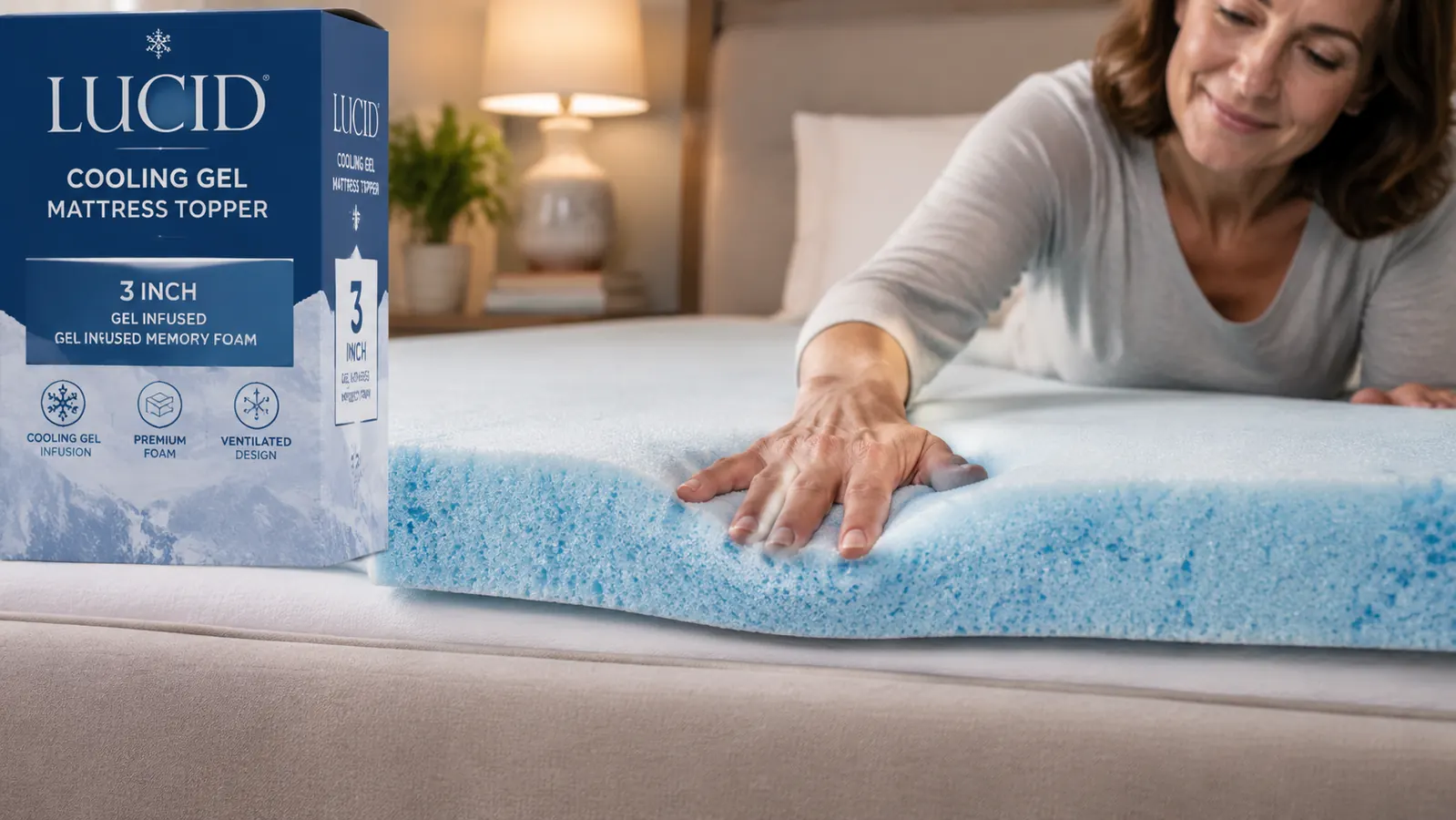
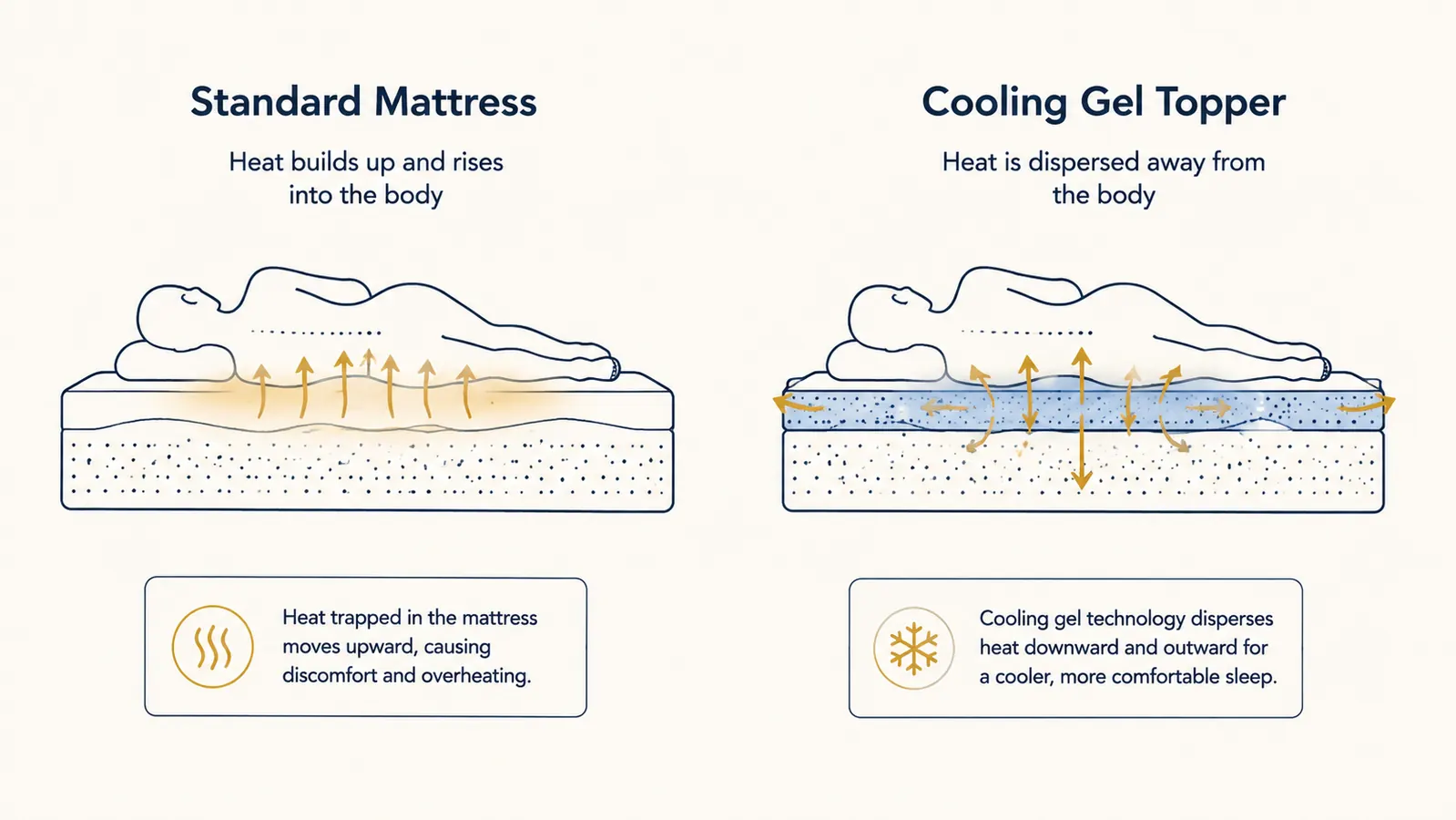
Most mattresses trap heat. Traditional memory foam is dense and holds warmth the way a fleece blanket does. If your mattress is more than five years old, it is almost certainly part of the problem even if it still feels comfortable enough. The fastest fix is to put a cooling gel mattress topper between you and that dense foam. A gel topper uses open-cell foam structure and gel beads to pull heat away from the body rather than reflecting it back. The difference is real and measurable. Conventional foam conducts heat poorly. Cooling gel foam conducts it well, which means body heat moves through and disperses instead of building up.
The Lucid 3-Inch Cooling Gel Mattress Topper is the one I tell people to try first. It is a three-inch layer of gel-infused memory foam with ventilation channels cut through it to help airflow move through the material while you sleep. At an affordable price for a queen, it is a small fraction of what a cooling mattress costs, and it goes on top of whatever you already have. You do not need to buy a new bed. You need to change the surface. After two to three nights on a cooling gel mattress topper, most hot sleepers notice they are not waking mid-sleep to flip the pillow or kick off covers. That is what a different contact surface does. With 103,742 reviews and a 4.4-star rating, this particular mattress topper has been tested by a very large number of people in real homes, not a lab.
When you put on the Lucid cooling mattress topper, let it fully expand for 24 to 48 hours before you sleep on it. Compressed foam needs time to reach its full thickness and allow any packaging smell to off-gas. After that break-in window, it is ready. You will also need to make sure your fitted sheet is sized for the added height, so a deep-pocket sheet (usually labeled 15 inches or more) will fit over both the topper and your mattress together.
Step 2: Switch to Breathable, Natural-Fiber Sheets Over Your Cooling Gel Topper
Once you have a cooling gel mattress topper underneath you, the sheet sitting on top of it matters. Microfiber and polyester sheets feel soft but they trap heat and moisture. They are essentially a plastic barrier between you and the cooling foam below. Cotton, bamboo, and linen sheets breathe. They wick sweat and allow air to circulate. Percale cotton (a crisp, plain weave) is my personal recommendation for hot sleepers because it stays cool-to-the-touch and washes well over years. Thread count is mostly marketing. A 300-thread-count 100 percent cotton percale sheet will sleep cooler than a 600-thread-count sateen of the same fiber because sateen has a denser weave.
Bamboo sheets are a close second for people who run very warm. Bamboo viscose is naturally moisture-wicking and tends to feel cool against the skin even on warm nights. The tradeoff is that bamboo sheets wrinkle more easily and can be higher maintenance to wash. If that is not a concern for you, bamboo over a cooling gel mattress topper is one of the better combinations for hot sleepers. Linen, the third option, is the most breathable fiber available but it takes some getting used to. The texture is rougher, especially new. If you already like linen clothing, linen sheets will feel familiar. If you have never worn linen, start with cotton percale.
Step 3: Cool Your Room Before You Get Into Bed
Your cooling gel mattress topper and breathable sheets work best when the room temperature is already on their side. The body begins to drop its core temperature as part of the natural sleep onset process. That drop is easier when the room is cool rather than working against it. The research on sleep temperature consistently points to 65 to 68 degrees Fahrenheit as the optimal range for most adults. That is cooler than most people keep their homes during the day.
You do not need the AC running all night to get there. Run it for 30 to 45 minutes before bed to bring the room down, then turn it off or raise the setpoint a few degrees. The thermal mass of a cooled room holds its temperature for several hours, especially if you keep the door closed. A ceiling fan is also useful here, not because it cools the air, but because moving air increases evaporation from your skin and makes the same temperature feel several degrees cooler. If you do not have a ceiling fan, a box fan on a dresser aimed across the bed achieves a similar effect. The key is airflow over the body, not just cooled air in the room.
The body starts dropping its core temperature as you fall asleep. A cool room, breathable sheets, and a cooling mattress topper all work in the same direction. Stack them together and you stop fighting your own biology.

Step 4: Change What You Wear (and What You Put on Your Pillow)
This step surprises people. What you sleep in affects your body temperature more than most realize. Tight-fitting synthetic sleepwear traps heat against the skin in the same way synthetic sheets do. Loose cotton or bamboo sleepwear allows air to circulate close to the body. If you sleep in a fitted t-shirt and gym shorts made of moisture-wicking athletic fabric, consider that athletic fabrics are designed to move sweat away quickly during exercise, not during sleep. During sleep, you produce far less heat than during a workout, and those fabrics can actually over-insulate at lower activity levels. A loose cotton or bamboo sleep shirt is less exciting than performance fabric, but it will keep you cooler.
The pillow is often overlooked. Your head and neck radiate a significant amount of body heat, which is why so many people flip their pillow to the cool side in the middle of the night. A pillow with a cooling gel foam insert or a shredded latex fill with ventilation works in the same way your cooling gel mattress topper does: it draws heat away rather than holding it. If you do not want to replace your pillow, a cooling pillowcase made from bamboo or copper-infused fabric is a lower-cost option that makes a noticeable difference. Not a night-and-day change like a mattress topper, but real.
Step 5: Build a Wind-Down Routine That Lowers Your Core Temperature Before Bed
The last step is the most underrated and also the cheapest. Your core body temperature peaks in the early evening and needs to fall by about one to two degrees Fahrenheit before you can fall into deep sleep. Anything that delays that drop makes it harder to fall asleep and stay asleep. A warm shower 60 to 90 minutes before bed is one of the most reliable ways to accelerate that drop. Hot water brings blood flow to the skin surface, you step out, that surface heat dissipates quickly into the cooler air, and your core temperature falls faster than it would on its own. It sounds counterintuitive. It works.
Beyond the shower, avoid vigorous exercise within two hours of sleep. Exercise raises core temperature and keeps it elevated. A light walk is fine. Running or lifting within two hours of bed competes with the natural cooling process. Eating a large meal close to bedtime has a similar effect, since digestion generates heat. If you are hungry at night, a small cool snack (yogurt, fruit, something easy to digest) is better than a heavy one. And if you drink alcohol in the evenings, know that it raises skin temperature and disrupts the second half of sleep. A glass of wine is not the main event here, but it is a variable worth paying attention to if you are still waking up hot after the other steps are in place.
What Else Helps Hot Sleepers
A few things that did not make the main steps but are worth knowing. Blackout curtains reduce heat gain through windows during the day, which means your bedroom starts the evening cooler. If your room faces west and gets late afternoon sun, this matters more than you might think. A room that has been baking all afternoon is fighting the same cooling process you are trying to support at night. Blackout curtains reduce that solar load and keep the room naturally cooler heading into the evening. They also block light, which helps with sleep onset for people sensitive to morning brightness.
Weighted blankets are sometimes asked about by hot sleepers, and my honest answer is: it depends entirely on the material. A cotton weighted blanket in a 15-pound range can work fine for someone who does not run extremely hot. A polyester-filled weighted blanket will likely make an already-hot sleeper miserable. If you love the feeling of a weighted blanket but heat is a problem, look for one made with cotton fill and a breathable cotton cover. The weight comes from glass beads, which are neutral in terms of heat retention. It is the fabric shell that determines whether the blanket breathes.
Finally, one practical note on the cooling gel mattress topper: it will not fix a mattress that is actively causing pain or pressure points. If you wake up with lower back pain, hip pain, or numbness in your arms, the topper addresses the heat piece but you may also need a different firmness level underneath. A three-inch cooling gel topper can add some softness to a firm mattress, but it is not a structural fix for a worn-out bed. Read the full review of the Lucid topper if you want a detailed breakdown of firmness, off-gassing, and how long the cooling effect holds up over time.
You know what to do. The cooling mattress topper is the first move.
The Lucid 3-Inch Cooling Gel Mattress Topper is the most practical starting point for hot sleepers who do not want to replace their entire mattress. Over 103,000 people have tried it. Check today's price on Amazon and see if it is available in your size.
Amazon Check Today's Price on Amazon →