
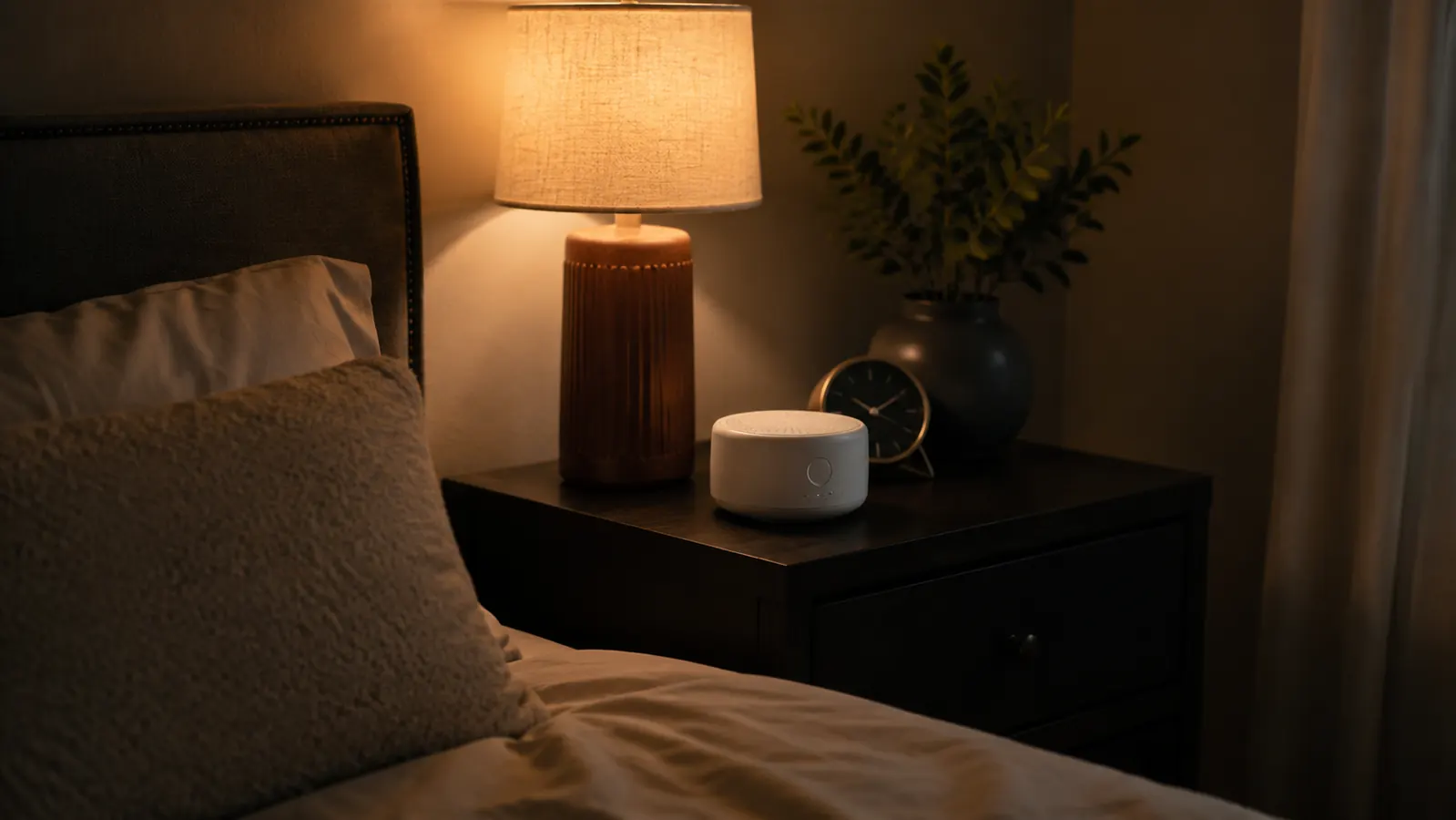
I have treated bodies for twenty-two years. I know what sleep deprivation does to muscle tissue, to pain thresholds, to a person's ability to heal. And for most of that time I was a terrible sleeper myself. Not because I was anxious or sick. Because I heard everything. The refrigerator cycling on at 2 a.m. The neighbor's car door at 5:47. The garbage truck that sounded like it was in my bedroom. I tried earplugs until my ears rebelled. I downloaded three different sleep apps and forgot to charge my phone. I kept the ceiling fan on year-round just for the noise. None of it was consistent. None of it actually worked. Four months ago I started running the Homedics SoundSleep on my nightstand every single night. This review is what I found.
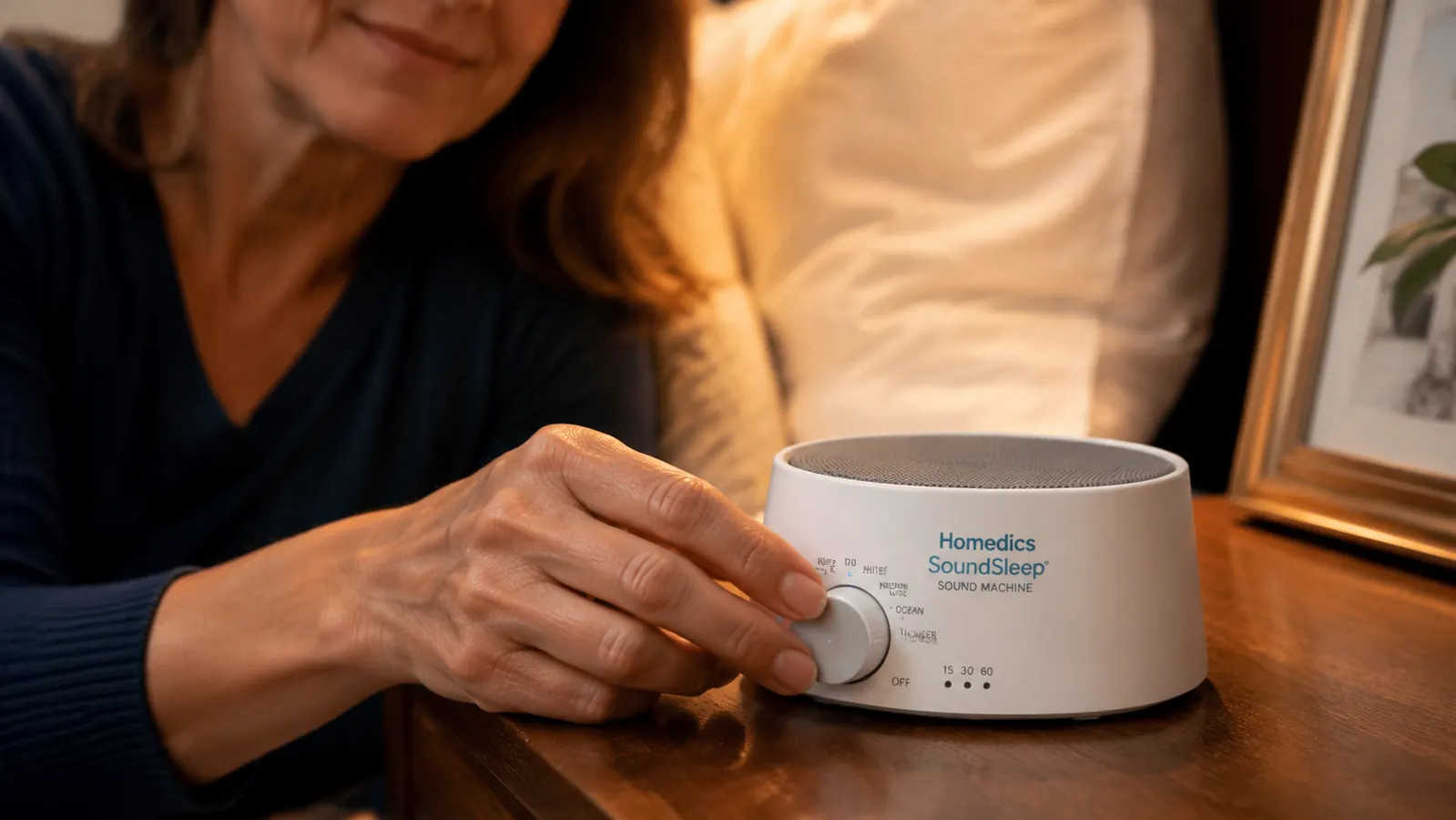
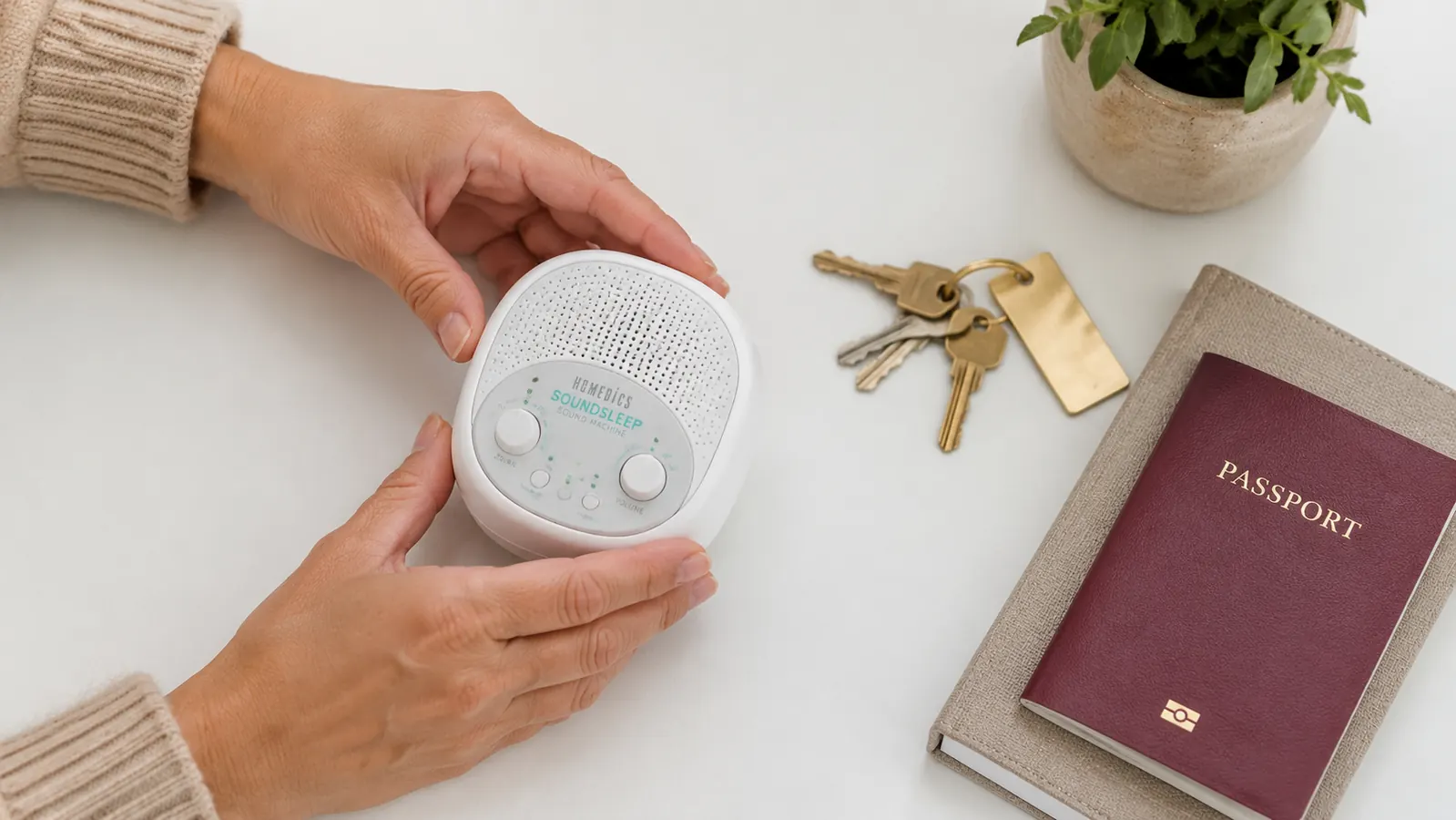
The Homedics SoundSleep is a compact white noise machine with six sound options, a simple volume dial, and a design that fits in your palm. It has nearly 59,000 ratings on Amazon and sits at 4.5 stars. That kind of review volume is hard to fake, and it made me curious enough to stop scrolling and actually order one. I am glad I did, with a few caveats I will explain below.
The Quick Verdict
A no-fuss white noise machine that does exactly what it promises for most light sleepers. Simple, affordable, and consistent. Falls short only if you need Bluetooth, a timer, or a very wide volume range.
Amazon Check Today's Price →If you have been woken by every sound in the house, this is the one thing worth trying before you give up on sleep entirely.
The Homedics SoundSleep runs six sound options from a palm-sized device. No app, no subscription, no charging cable. Just plug it in and sleep.
Amazon Check Today's Price on Amazon →How I Have Used It
I set the Homedics SoundSleep on my nightstand in early March. My bedroom is on the ground floor of a 1960s house with thin walls and a street out front that picks up foot traffic and the occasional early-morning delivery truck. I also have a seventeen-year-old cat named Biscuit who considers 4 a.m. an appropriate time to announce things. My husband sleeps through all of it. I never could.
I chose white noise as my default setting and left it there for the first six weeks to get a clean read on one sound before experimenting. Volume I settled at roughly two-thirds of the dial. Loud enough to mask sudden sounds from the street, quiet enough that I was not fighting it to fall asleep. I kept a simple log on a notepad: how many times I woke, what woke me, how long it took to get back to sleep. What I noticed by week three was that I was waking to Biscuit less often and not at all to street noise.
From week seven onward I tested the other five sounds: thunder, ocean, summer night, brook, and rain. Ocean was my second favorite. Thunder I turned off quickly. My husband tried brook and brook won him over after a lifetime of calling white noise machines unnecessary. Relevant data point: he now asks me to turn it on when I forget.
Sound Quality and the Six Options
White noise on the Homedics SoundSleep sounds like the inside of a plane cabin at cruise altitude. That flat, steady hiss. If you have ever fallen asleep on a flight without trying, you understand exactly what I mean. It is not a rich or layered sound. It is a wall. And walls work.
Ocean is more textured. There is a wave rhythm to it that some people find relaxing and others find distracting because the brain wants to track the pattern. For me it worked well on nights when I was not already overtired. On nights when I was exhausted and just needed to go under fast, white noise was more effective because there was nothing to follow.
The summer night option is crickets. If you grew up in the South or anywhere rural, this may feel like home. If you grew up in a city, it might feel slightly odd. I liked it in spring but found it seasonal in a way white noise is not. Brook and rain are both pleasant. Thunder I could not get past the randomness of. My nervous system kept anticipating the next rumble instead of settling down, which is the opposite of what you want.
The machine does not loop with an audible seam on any of the six sounds, which matters more than people realize. A looping sound file with a click or reset every forty-five seconds will wake a light sleeper just as reliably as a car door. This one does not do that.
What White Noise Actually Does to Your Sleep (The PT Version)
Patients ask me all the time why white noise helps when it seems like just adding more sound. The answer is that your brain never truly goes off during sleep. A part of it stays alert to changes in the environment, specifically sudden sounds that signal potential threat. This is hardwired. It served us well when threats were real. Now it wakes you up because a raccoon knocked over your recycling bin.
Sound masking is not about silence. It is about giving your nervous system something steady and predictable so it can finally stand down.
White noise masks sudden sounds by raising the ambient sound floor of your bedroom. When the gap between the background sound level and the intruding sound is smaller, your brain registers less of a change and stays in sleep instead of surfacing. This is not a trick. It is acoustic physics working in your favor. Research published in the journal Frontiers in Neurology has examined noise masking for sleep in clinical settings. The mechanisms are well understood. What I can add from a rehabilitation standpoint is that consistent sleep depth matters for tissue repair, inflammation regulation, and pain sensitivity. My patients who sleep poorly heal slower. That is not opinion. It is what I see every week.
Volume Range and a Real Limitation
The volume dial on the Homedics SoundSleep is a physical knob, not a digital slider. I appreciate that. You do not have to look at it in the dark. You just reach over and turn. The range goes from almost nothing to moderately loud. I want to be specific: at maximum volume, this machine will not fully mask a loud television in the next room, a partner who snores at the high end of the scale, or a genuine city street with buses and sirens. It is designed for typical household noise, not extreme environments.
If your noise problem is that category of disruptive, you need a different machine with more output, or you need to combine this with a sleep mask and accept that you are doing two things instead of one. For what I describe as my bedroom situation, ground floor with moderate street traffic and one vocal senior cat, the volume range was more than adequate at roughly sixty-five percent of the dial.
There is also no timer function. The machine runs continuously until you turn it off. Some people want a timer so the sound fades after an hour. I actually prefer continuous because re-exposure sounds in the night can disrupt you just as much as the sudden silence of a machine switching off. But if a timer matters to you, know that you will not find it here.
Four Months In: What Changed and What Stayed the Same
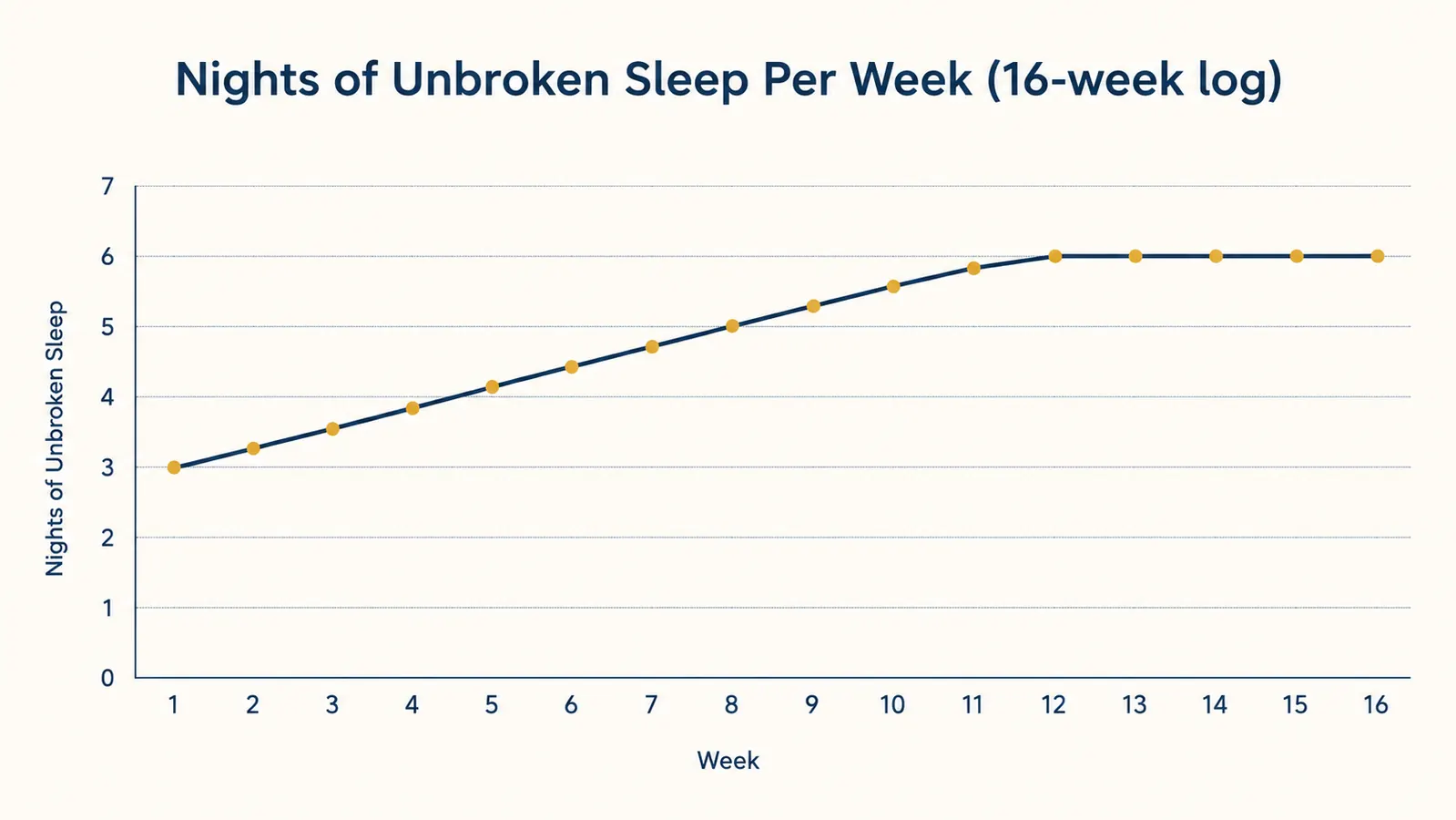
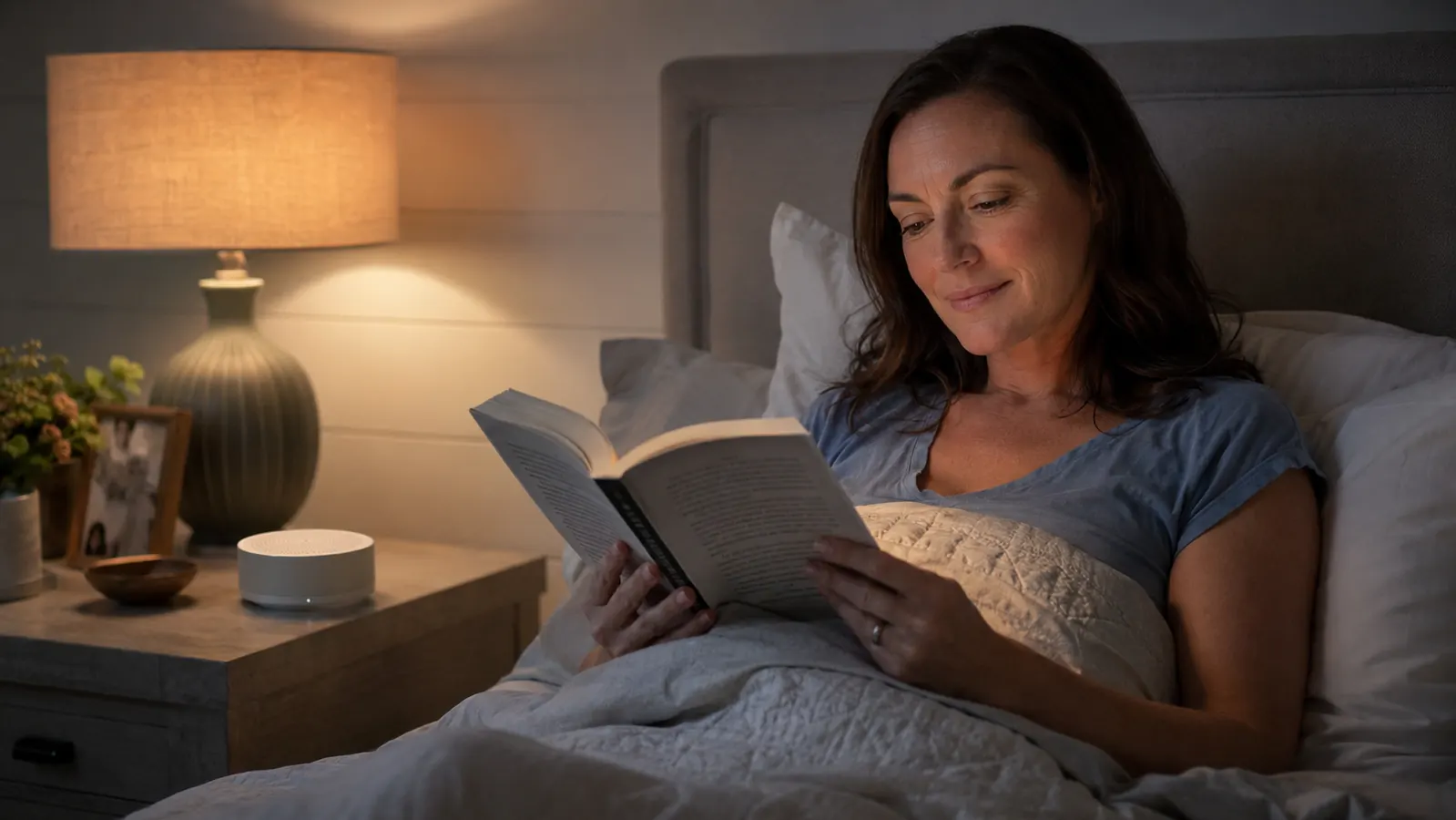
I tracked my sleep interruptions for sixteen weeks. In week one I averaged three to four wake-ups per night. By week four that had dropped to one, sometimes zero. By week eight I stopped tracking because the improvement had stabilized and I no longer needed the data to convince myself it was working. My log from the last eight weeks shows two nights with more than one interruption. Both were when Biscuit was sick and making noise that exceeded the masking range. The machine cannot help when the source is in your room.
What surprised me was how quickly the improvement came. I expected a gradual change over weeks. It was more immediate than that. By night five I noticed I was falling back asleep faster after Biscuit woke me. Not because the sound had changed but because the room felt calmer to wake up in. There was already something steady to orient to instead of silence and then dread about whether sleep would return.
The physical machine has held up without any issues. No crackling, no change in sound quality, no signs of wear on the dial. It runs on AC power via a short cord with no battery option, which is worth noting for travel. The cord length is adequate for a nightstand but tight if your outlet is more than a few feet away. I have seen people mention this in reviews and it is accurate. Bring a short extension cord if you travel with it.
What I Liked
- Six sound options with no audible loop seam, so nothing clicks or resets to wake you
- Physical volume dial you can adjust in the dark without fumbling
- Consistent AC power means no dead battery at 3 a.m.
- Compact and genuinely travel-friendly at palm size
- Straightforward operation with zero app or Bluetooth dependency
- Nearly 59,000 Amazon ratings at 4.5 stars gives real confidence in longevity
- Ocean and white noise options specifically are well-rendered for the price
Where It Falls Short
- Maximum volume is limited, making it insufficient for heavy snoring or loud street noise
- No timer function, so it runs until you turn it off manually
- No battery or USB-C power option, which limits use in hotels without a nightstand outlet
- Short AC cord requires close outlet placement or an extension cord
- Thunder sound option is too variable and irregular for anyone with a sensitive startle response
- No memory for your last volume setting when unplugged and replugged
How It Compares to the Phone App Approach
I used sleep sound apps for two years before buying this machine. The apps were free and the sounds were fine. What they required was keeping my phone on the nightstand, plugged in, with the screen accessible. That meant I also had access to every notification, every impulse to check the time, every 11 p.m. email that could pull me back out of the wind-down I was trying to create. The machine removed all of that. The phone went across the room. The only thing on my nightstand with a function was the thing making steady sound. That boundary matters more than the sound quality difference, which is real but small. For a deeper look at how the two compare in practice, I wrote a full breakdown in white noise machine vs phone app.
Who This Is For
This machine is for light sleepers who wake to variable household sounds: a partner getting up in the night, a pet, a radiator cycling, traffic that ebbs and flows, sounds that are not loud on their own but are sudden enough to surface you. It is for people who want something simple that plugs in and works without a learning curve. It is for anyone who has been running a fan for the noise and wants something quieter and more intentional. It works well for shared bedrooms, apartments with thin walls, and anyone whose neighborhood comes to life before they want to wake up. I also recommend it for my patients in their fifties and sixties who describe waking lighter as they age. That lighter sleep is partly neurological and partly that the ambient sound environment of a bedroom at 3 a.m. is very different from what it was at midnight.
If you want to understand the science behind why this works before you buy, I put together a list of the specific mechanisms in 10 reasons a white noise machine helps you sleep through noise. Reading that first might make your buying decision easier.
Who Should Skip It
If your primary noise problem is a partner who snores loudly, this machine alone will not solve it. The volume ceiling is not high enough. You would need a higher-output machine placed closer to your head, or a combination of this and ear protection. If you need Bluetooth to sync with other devices, a mobile app, or a programmable timer, look elsewhere. If you travel frequently and rely on USB-C for everything, the AC-only power is an inconvenience. And if you sleep deeply through anything already, you genuinely do not need this. I have patients who could sleep through construction. They are not the audience for a sound machine and I would not recommend they spend money on one.
Four months in, mine is still running every night. Here is where to get yours.
The Homedics SoundSleep is one of the most-reviewed sound machines on Amazon for a reason. Six sounds, simple dial, compact size. Check today's price and see current availability below.
Amazon Check Today's Price on Amazon →